

How Do Lenders Make Their Money From a Reverse Mortgage
Understanding how do lenders make their money from a reverse mortgage can help you compare loans based on more than the sales pitch.
Every business needs to generate revenue to stay in business. Reverse mortgage lenders are no different.
Green Monarch makes money when it closes reverse mortgages.
So does every other reverse mortgage lender you speak with.
The more useful question is how the lender gets paid and whether those costs and sources of compensation are being clearly explained to you.
With a reverse mortgage, lender revenue can come from several places, including origination fees, the margin built into an adjustable interest rate, servicing, and the price investors pay for the loan in the secondary market.
Understanding those pieces can make you a much better shopper.
Reverse Mortgage Fees
The first thing to understand about reverse mortgage fees is that not every dollar a lender earns works the same way.
Some costs are easy to see because they appear as upfront charges.
Others can affect what you pay over the life of the loan.
One of the most straightforward is the origination fee.
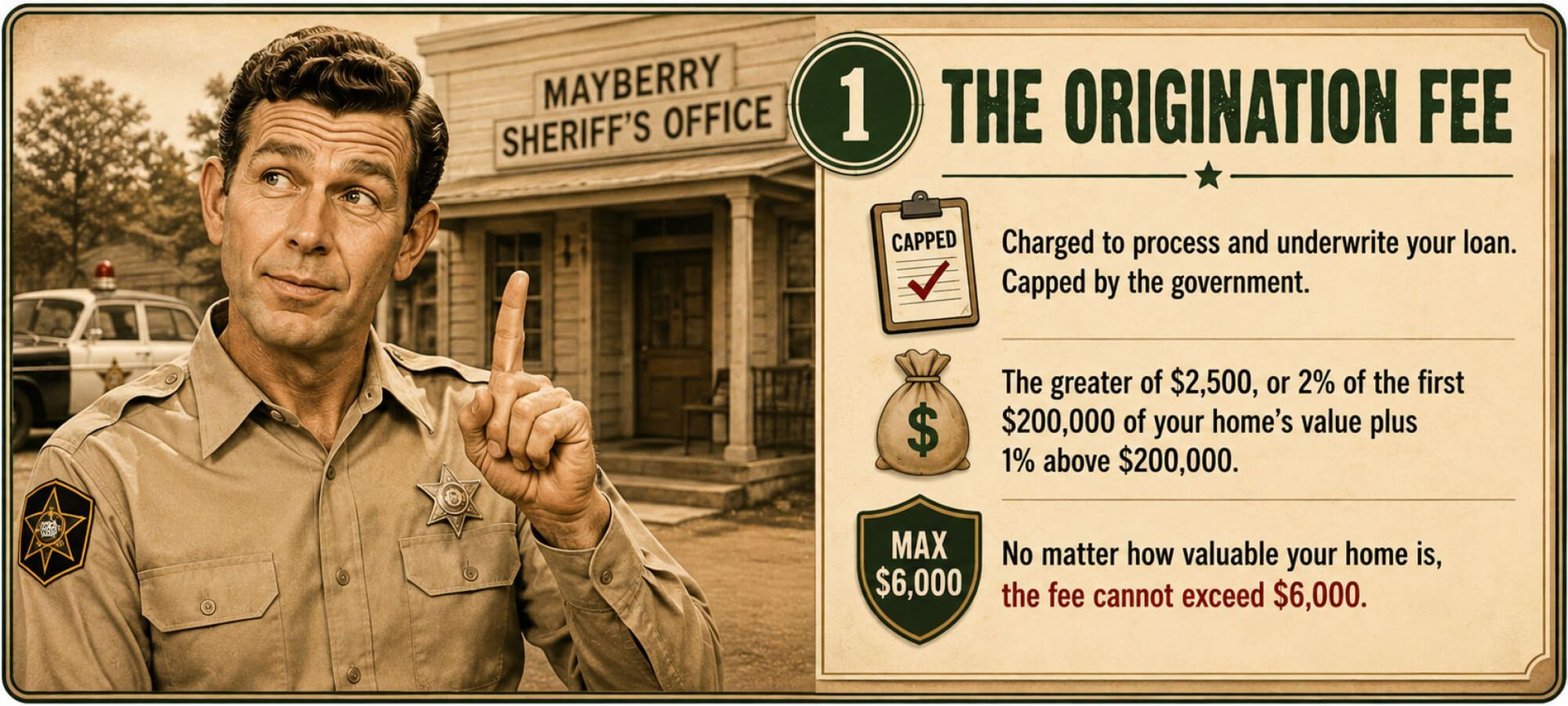
According to Green Monarch's source material, a lender may charge the greater of $2,500 or 2% of the first $200,000 of the home's value plus 1% of the amount above $200,000, subject to a maximum origination fee of $6,000.
That cap matters, particularly in California.
If your home is worth $2 million, for example, Green Monarch's source explains that the origination fee still cannot legally exceed $6,000.
Your lender does not simply make a larger origination fee because your California home is worth more.
Reverse Mortgage Origination Fee
The reverse mortgage origination fee compensates the lender for processing and underwriting the loan.
This is one of the easiest lender charges to identify because the federal HECM rules limit how much can be charged.
But focusing only on the origination fee can cause homeowners to miss another important part of the loan.
The margin.
Green Monarch considers this important enough to call it "the one almost nobody explains."
That's because the margin may affect the economics of your reverse mortgage for much longer than an upfront origination fee.
What Is the Margin on a Reverse Mortgage?
For an adjustable-rate loan, the reverse mortgage margin is one of the most important numbers to understand when comparing lenders.
Green Monarch's source explains that an adjustable reverse mortgage interest rate has two components:
A published market index + a lender-set margin
The lender does not control the published index.
The lender does set the margin.
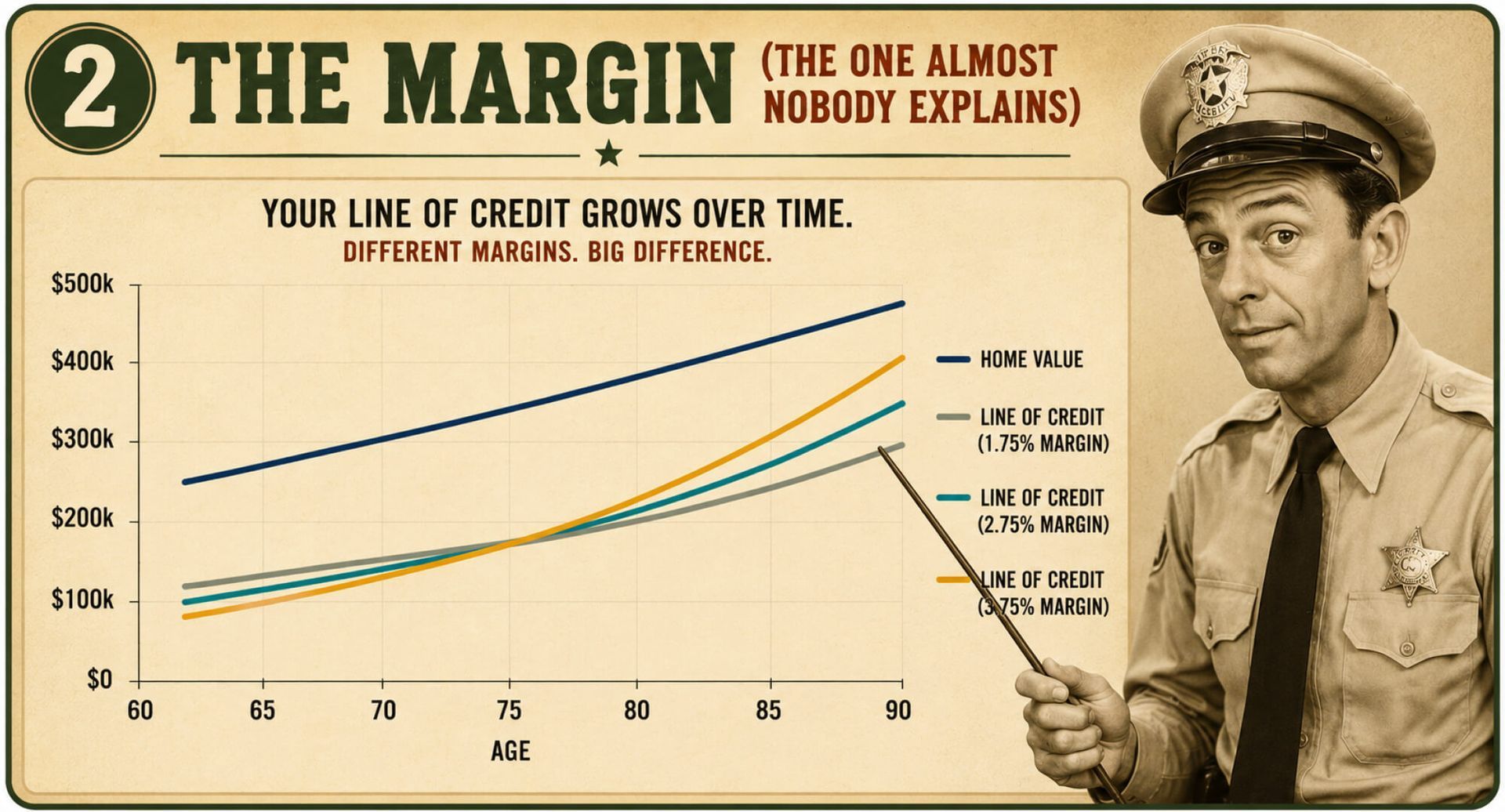
The source states that the margin typically runs between 1.5% and 3% and does not change over the life of the loan. It also explains that the margin is a significant source of lender revenue and compounds on the outstanding loan balance.
That's why homeowners should know the margin, not just hear that a lender offers a "competitive rate."
Why Does the Reverse Mortgage Margin Matter?
The reason the reverse mortgage margin matters is that it can affect both your loan today and how the numbers develop over time.
Green Monarch's source explains that the margin is not simply an upfront expense.
It is an ongoing component of the rate applied to the outstanding balance.
The source also notes that the margin can affect the initial borrowing power and the growth of the principal limit over time. A higher margin can reduce the initial principal limit while causing that limit to grow faster afterward.
The practical lesson is simple:
Don't compare only the upfront fees. Compare the margin too.
If one lender offers lower closing costs but a higher margin, that difference may become important depending on how long you keep the loan.
Reverse Mortgage Closing Costs
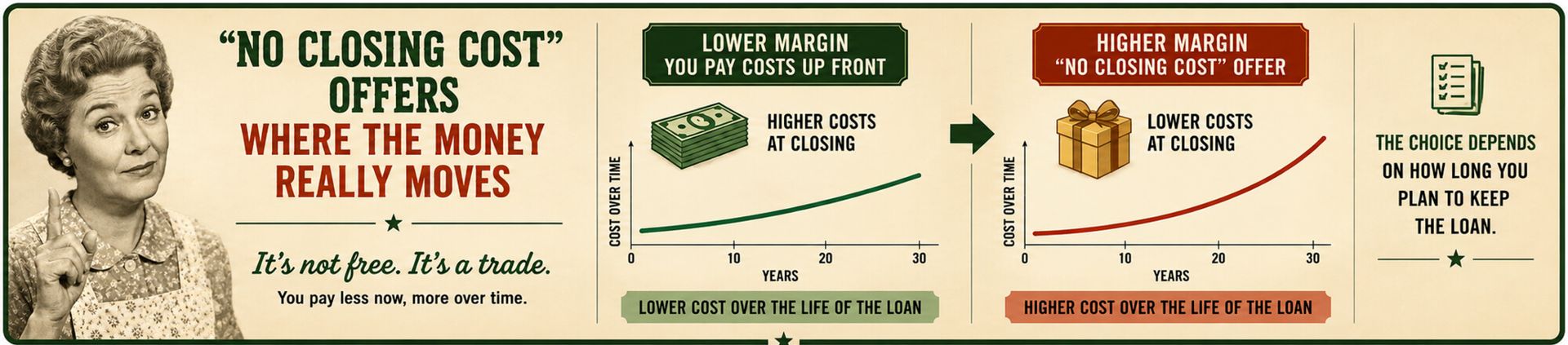
When comparing reverse mortgage closing costs, homeowners may encounter lenders advertising "no closing cost" reverse mortgages.
Those offers can be real.
But "no closing cost" does not necessarily mean the economic cost disappeared.
Green Monarch's source explains that a lender-paid closing cost structure may shift the tradeoff toward a higher margin. In that situation, you pay less at closing but potentially more over the life of the loan.
That doesn't automatically make the offer bad.
It means you need to understand the trade.
A homeowner who expects to keep the loan for a relatively short period may evaluate that trade differently from someone who expects to have the reverse mortgage for many years.
Are No Closing Cost Reverse Mortgages Really Free?
The answer to are no closing cost reverse mortgages really free is where Green Monarch's transparency approach becomes particularly useful.
The source describes it this way:
Less cash now for more cost later.
Depending on the specific offer, a lender may absorb or rebate certain upfront costs while earning compensation elsewhere in the loan structure.
Green Monarch's source states that for someone expecting to hold the loan for many years, a lower margin may outperform waived closing costs, while the opposite may sometimes be true for a shorter loan period.
Neither structure should automatically be called better.
The better question is:
Which structure costs less for the way you realistically expect to use the loan?
Reverse Mortgage Fees and Charges
When reviewing
reverse mortgage fees and charges, look beyond the most obvious number on the proposal.
The source article identifies several areas that can affect lender
compensation or the economics of the loan:
- Origination fees
- The lender-set margin
- Servicing
- Closing-cost structures
- Secondary-market pricing or premiums
- Rebates or lender credits
Green Monarch's source states that lenders may charge up to $35 per month in servicing fees, while also noting that it has become common not to charge an explicit servicing fee and instead incorporate servicing economics into the margin.
This is why simply asking,
"What are your closing costs?" doesn't necessarily give you the complete picture.
Reverse Mortgage Broker Commission
Understanding reverse mortgage broker commission also requires looking beyond the origination fee.
According to Green Monarch's source, when a lender funds a loan, the loan may then be sold into the secondary market. The amount received can exceed the loan's face value.
The source states that mortgage broker income can consist of the origination fee plus the premium received when the mortgage is sold. On higher-balance transactions, that premium can be substantial.
That secondary-market premium helps explain another term borrowers may encounter:
The rebate.
What Is a Reverse Mortgage Rebate?
A reverse mortgage rebate can occur when some of the economics generated by the loan are applied back toward the borrower's costs.
Green Monarch's source explains that the premium associated with the loan can effectively move in one of two directions.
It may be applied toward the borrower's costs, potentially reducing or eliminating origination fees and other closing costs.
Or it may be retained as compensation by the broker or lender.
The source notes that competitive lenders may rebate a portion of their premium to the borrower through a negative origination fee.
This is another reason two reverse mortgage offers can look very different even when the underlying loan program is similar.
Where Does a Reverse Mortgage Lender's Money Come From?
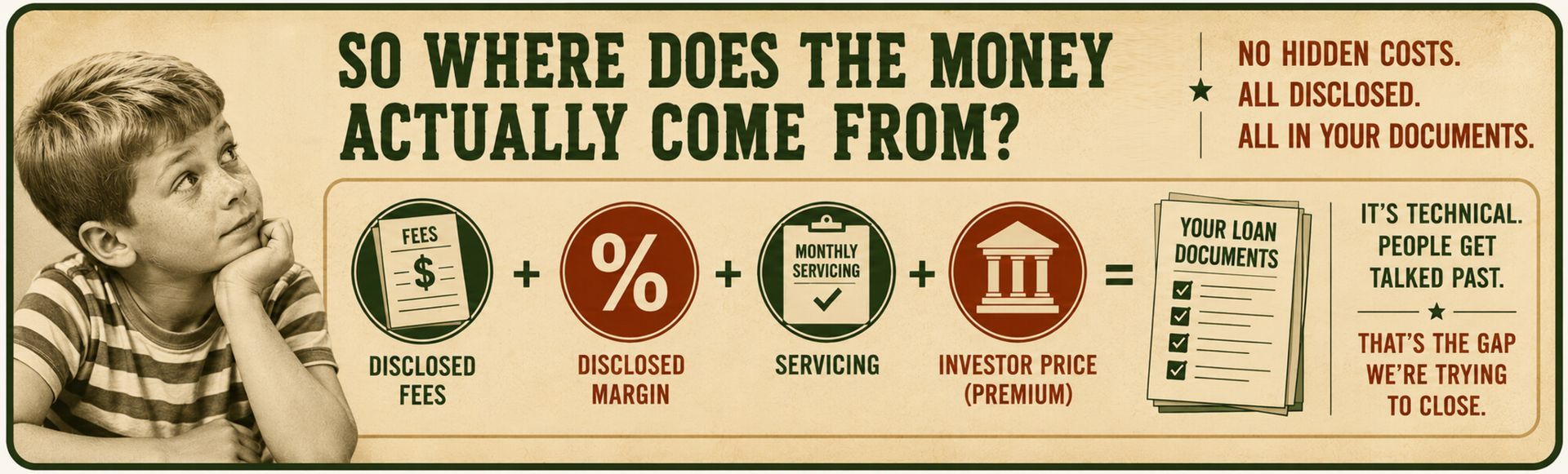
So when you ask where does a reverse mortgage lender's money come from, the answer is not one single fee.
According to Green Monarch's source, lender compensation can involve:
Disclosed fees + disclosed margin + servicing + investor pricing
The infographic on page 6 of Green Monarch's original article illustrates these pieces together and emphasizes that the problem is not necessarily hidden charges. The problem is that the financial mechanics can be technical enough that borrowers may not realize which numbers deserve their attention.
That is the gap Green Monarch says it is trying to close.
How to Compare Reverse Mortgage Lenders
When
comparing reverse mortgage lenders, don't stop at asking who has the lowest closing costs.
Green Monarch recommends asking several more specific questions:
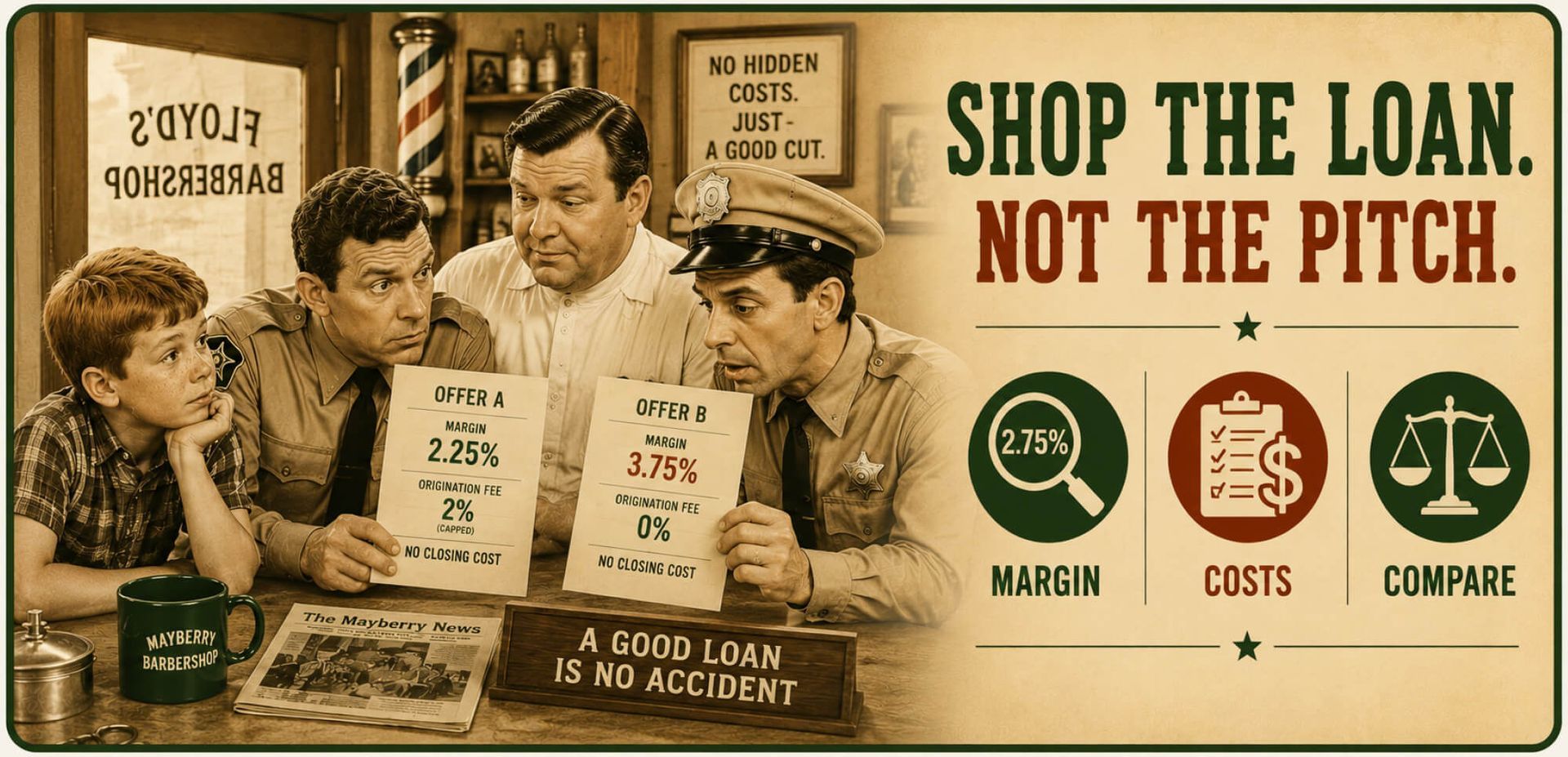
- What is your margin? Ask for the actual number.
- How does your margin compare with other available offers?
- If you're waiving closing costs, what does that do to my margin?
- Can you show me both structures side by side?
- What would each option look like after 5, 10 and 20 years?
- Exactly how do you get paid on my loan?
Those questions change the conversation.
Instead of comparing advertising claims, you're comparing the actual economics of the loans.
Reverse Mortgage Costs in California
For California homeowners, reverse mortgage costs in California deserve particular attention because higher home values can make the overall transaction substantial even though the HECM origination fee itself is capped.
A valuable home does not allow a lender to simply keep increasing the origination fee.
As Green Monarch's source emphasizes, even its example of a $2 million California property remains subject to the $6,000 origination-fee ceiling described in the source.
But the origination fee is only one part of the comparison.
A California or Orange County homeowner evaluating a reverse mortgage should also examine the margin, lender credits, closing-cost structure and how those choices may affect the loan over time.
Should I Choose the Reverse Mortgage With the Lowest Closing Costs?
The lowest reverse mortgage closing costs do not automatically identify the least expensive loan.
This is one of the central lessons of Green Monarch's original article.
One lender may offer lower upfront costs with a higher margin.
Another may require more money upfront while offering a lower margin.
Which one works better can depend partly on how long the reverse mortgage remains in place.
That is why Green Monarch recommends asking lenders to show the alternatives side by side at year 5, year 10 and year 20.
Shop the loan, not the pitch.
Green Monarch's Take on Reverse Mortgage Lender Compensation
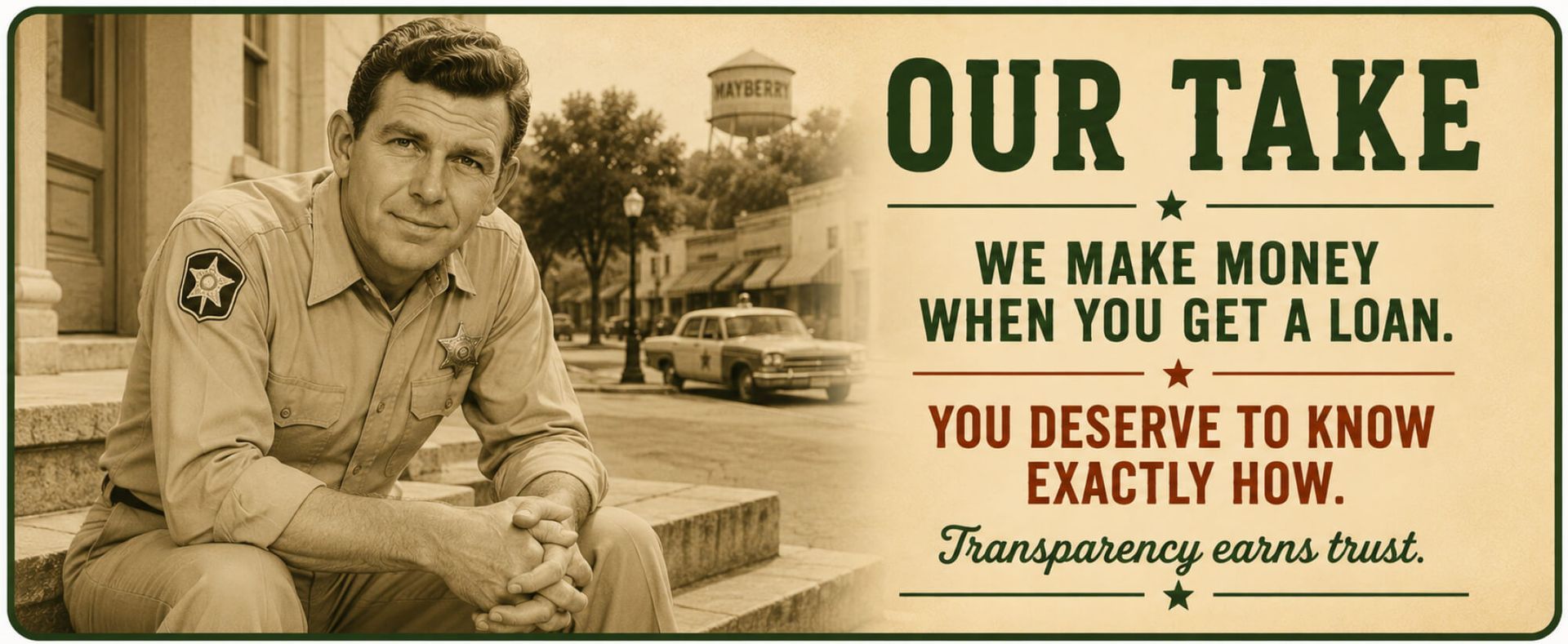
Green Monarch's position on reverse mortgage lender compensation is refreshingly straightforward:
Green Monarch makes money on reverse mortgages.
So does every lender you will speak with.
Green Monarch's source argues that pretending a lender's financial interests are perfectly aligned with the borrower's would be exactly the kind of comfortable dishonesty its educational library is intended to counter.
Instead, Green Monarch believes homeowners deserve to understand exactly how the economics work.
The company says its compensation is capped by government rules on one side and affected by market economics on the other, and that it differentiates itself through transparency about those mechanics.
That leads to one very useful question you can ask any reverse mortgage lender:
"Exactly how are you getting paid on my loan?"
Then listen carefully to the answer.

Compare the Loan Before You Decide
If you're comparing reverse mortgage lenders in California, don't make your decision based solely on who advertises the lowest fee or promises "no closing costs."
- Ask about the origination fee.
- Ask about the margin.
- Ask about lender credits or rebates.
- Ask whether reducing today's closing costs changes what you could pay over time.
- And ask the lender directly how the company makes money from your loan.
Transparency should not make a lender uncomfortable.
The better you understand how the lender gets paid, the better equipped you are to decide whether the loan being offered is right for you.
To discuss reverse mortgage costs, margins and available structures for your situation, call
Green Monarch at (800) 345-2041.