
Are Reverse Mortgages a Scam? Myths, Lies and the Truth
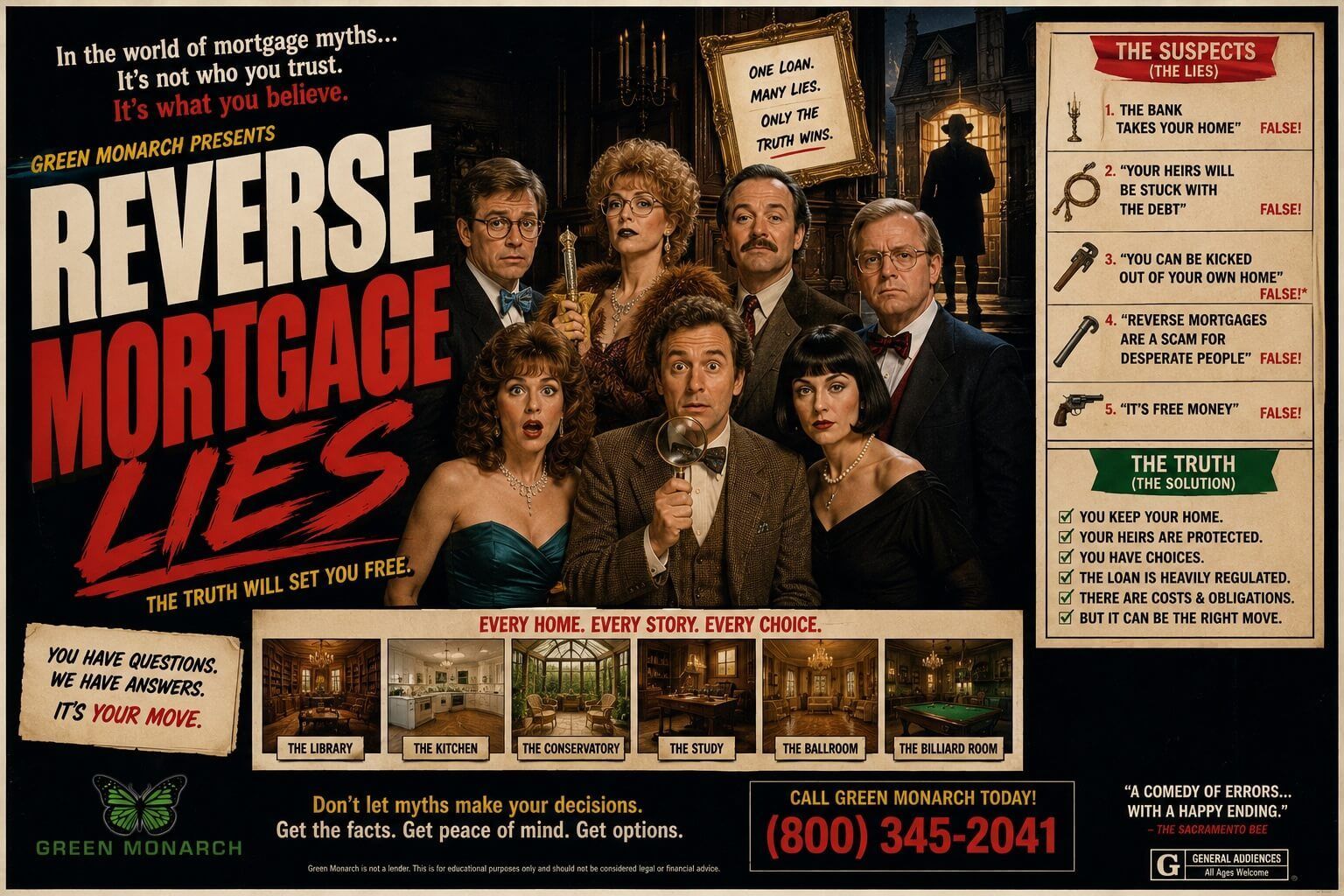
Sorting through reverse mortgage lies and myths can be difficult when outdated stories, half-truths, and aggressive sales claims all sound convincing.
Few financial products create as much confusion as a reverse mortgage. Some concerns come from older loan experiences. Others are repeated by friends or family members who may not know how today's federally insured HECM works. And some misinformation comes from people who are either strongly against reverse mortgages or far too eager to sell one.
California homeowners deserve something more useful: the facts, including the protections, costs, responsibilities, and situations where a reverse mortgage may not be the right choice. Let's take the most common claims one at a time.
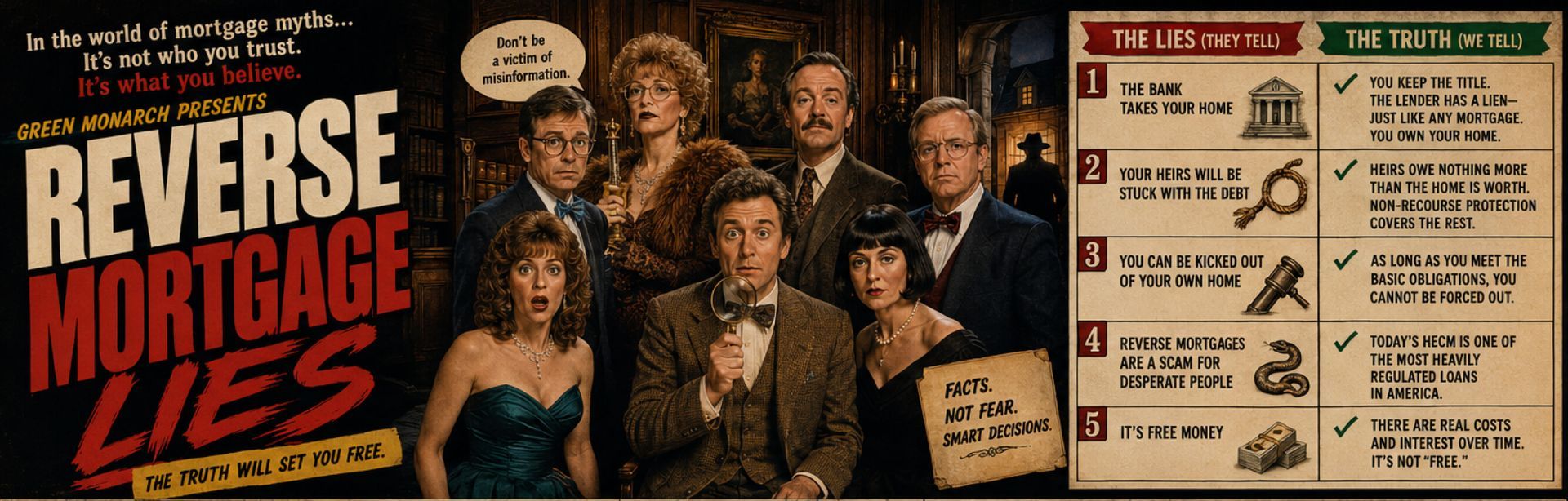
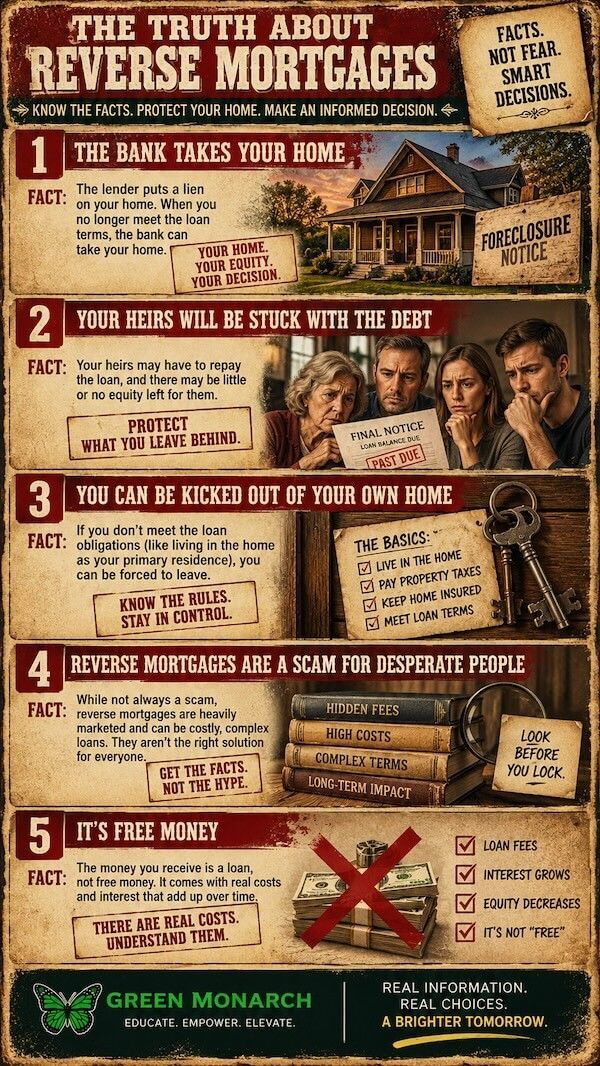
Reverse Mortgage Myth #1: The Bank Takes Your Home
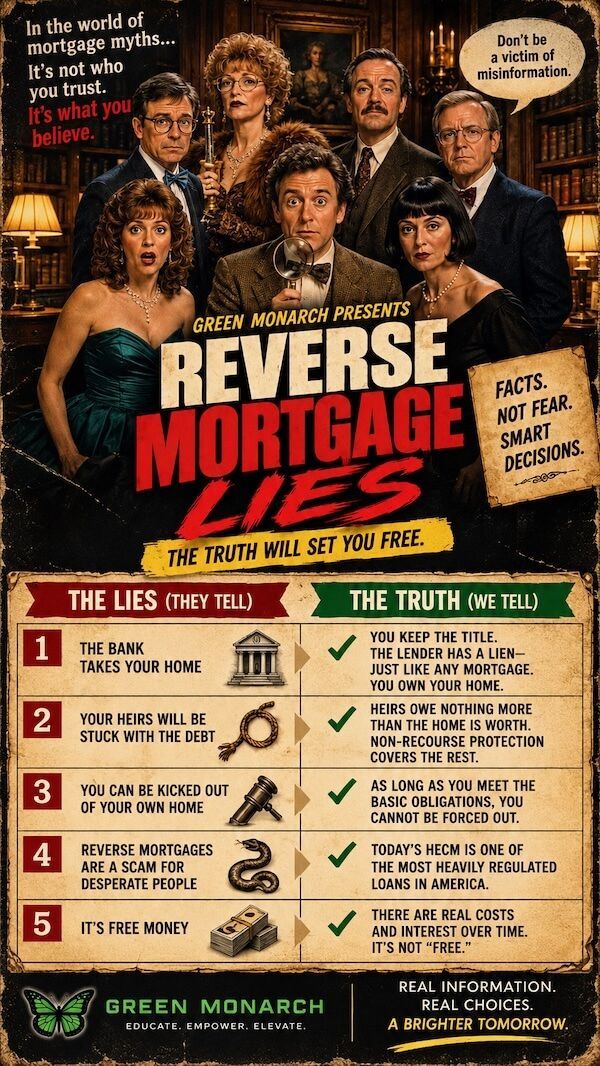
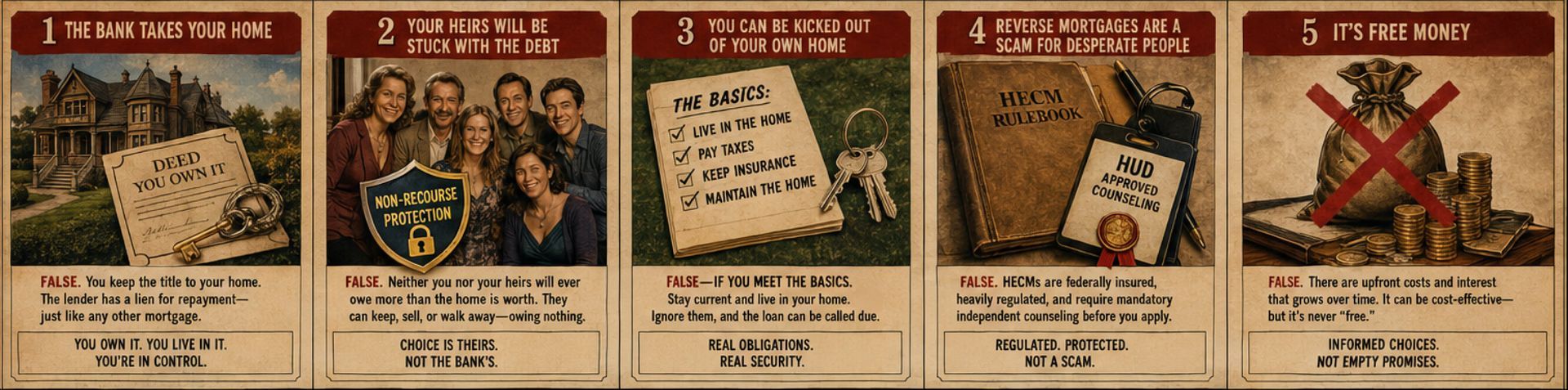
One of the most persistent reverse mortgage myths is that getting the loan means giving your home to the bank. With a reverse mortgage, the homeowner keeps title to the property. The lender places a lien on the home to secure repayment, similar to the lien associated with a traditional mortgage, but the homeowner remains the legal owner.
The confusion is understandable because people often connect mortgages with foreclosure. A reverse mortgage does not transfer ownership of the home to the lender simply because the loan is created.
You still own the home, live in it, and remain responsible for meeting the terms of the loan.
Reverse Mortgage Myth #2: Your Heirs Inherit the Debt
Another common reverse mortgage lie is that children or other heirs can become personally responsible for a reverse mortgage balance. A federally insured HECM is a non-recourse loan. Green Monarch's original guide explains that neither the borrower nor the heirs can be required to repay more than the home's value.
When the loan becomes due, heirs generally have choices. They may repay the required amount and keep the home, sell the property and retain remaining equity after the loan is satisfied, or allow the home to be used to settle the obligation without becoming personally responsible for an additional deficiency.
That distinction is important for California families concerned about protecting other estate assets.
Reverse Mortgage Myth #3: You Can Be Kicked Out of Your Home
The claim that a borrower can simply be "kicked out with a reverse mortgage" leaves out the responsibilities that actually determine whether the loan remains in good standing. Borrowers must continue using the home as their primary residence and meet the required property obligations.
Those include paying property taxes, keeping homeowners insurance current, and maintaining the home. These requirements matter. If they are ignored, the loan can become due. That is very different from saying the lender can remove a compliant homeowner whenever it wants.
A trustworthy reverse mortgage discussion should explain these obligations before the loan is made, not hide them in the fine print.
Reverse Mortgage Myth #4: Reverse Mortgages Are a Scam
Homeowners asking whether a reverse mortgage is a scam should separate legitimate concerns about suitability from claims that the HECM program itself is fraudulent. Modern HECMs include federal rules and borrower protections. Green Monarch's original article highlights mandatory HUD counseling, financial assessments, non-recourse protection, and disclosure requirements designed to protect borrowers.
That does not mean a reverse mortgage is right for everyone. A legitimate financial product can still be the wrong solution for a particular homeowner.
The useful question is not, "Are all reverse mortgages good?" It is, "Does this reverse mortgage make sense for my circumstances, goals, costs, and plans for the home?"
Reverse Mortgage Myth #5: It Is Free Money
Calling the proceeds reverse mortgage free money is just as misleading as claiming every reverse mortgage is a scam. There are real costs. A HECM can include FHA mortgage insurance and other loan expenses, and interest accrues on the outstanding balance over time because monthly principal and interest payments are generally not required.
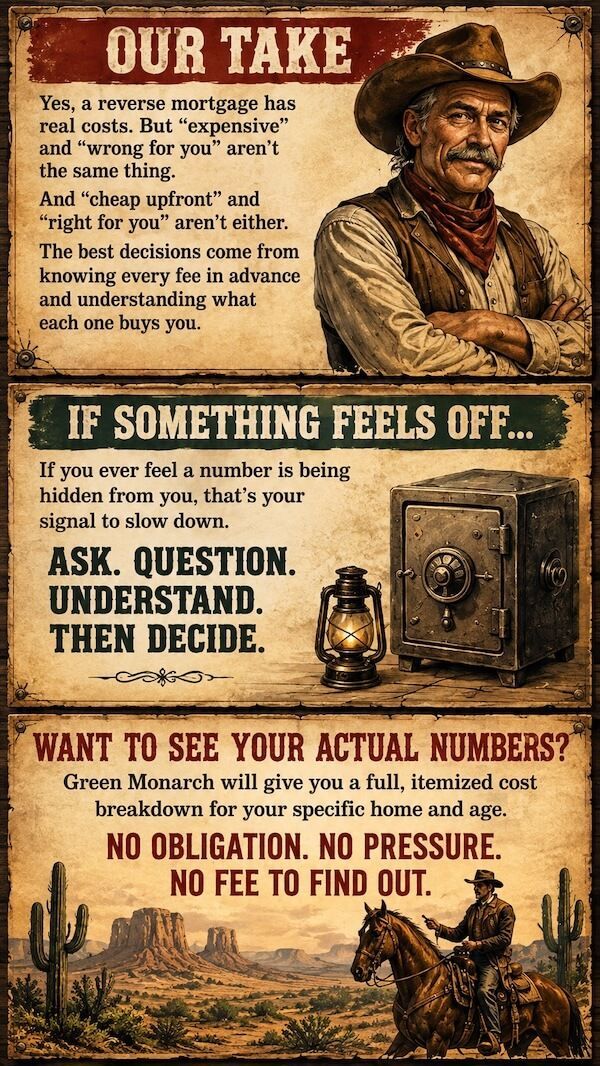
Whether those costs are worthwhile depends on the homeowner's plan, available alternatives, how the proceeds are used, and how long the loan remains in place. A reverse mortgage may be useful in the right circumstances. That does not make the money free.
California Reverse Mortgage Facts Matter More Than Fear
For homeowners researching California reverse mortgage facts, the best information should explain the disadvantages as clearly as the potential benefits. Fear can prevent someone from considering an option that deserves a closer look. Sales pressure can create the opposite problem by making a complicated financial decision sound too easy. Both approaches interfere with an informed decision.
The facts can exist at the same time: you keep ownership of your home, heirs have non-recourse protections, HECMs are regulated, and borrowers also have real costs and ongoing responsibilities. A reverse mortgage can be useful for some homeowners and a poor fit for others.
Orange County Reverse Mortgage Questions Deserve Straight Answers
For local homeowners, an Orange County reverse mortgage conversation should start with education rather than a sales pitch. Green Monarch is located in San Clemente and focuses exclusively on California reverse mortgages. Our approach is to explain how the loan works, what it costs, what responsibilities remain with the homeowner, what protections apply, and where the potential disadvantages may be.
We would rather tell a homeowner that a reverse mortgage does not fit their situation than make the loan sound better than it is. Call Green Monarch at 800-345-2041 when you want to discuss the facts about a California reverse mortgage without the fear or the sales spin.