

What Does a Reverse Mortgage Cost?
Understanding reverse mortgage costs means looking at both the fees charged at closing and the expenses that can build over the life of the loan. Cost is one of the biggest concerns California homeowners have when considering a reverse mortgage, and it deserves a direct answer. A reverse mortgage is not a cost-free financial product, and focusing only on the benefits without explaining the expenses can leave homeowners with an incomplete picture.
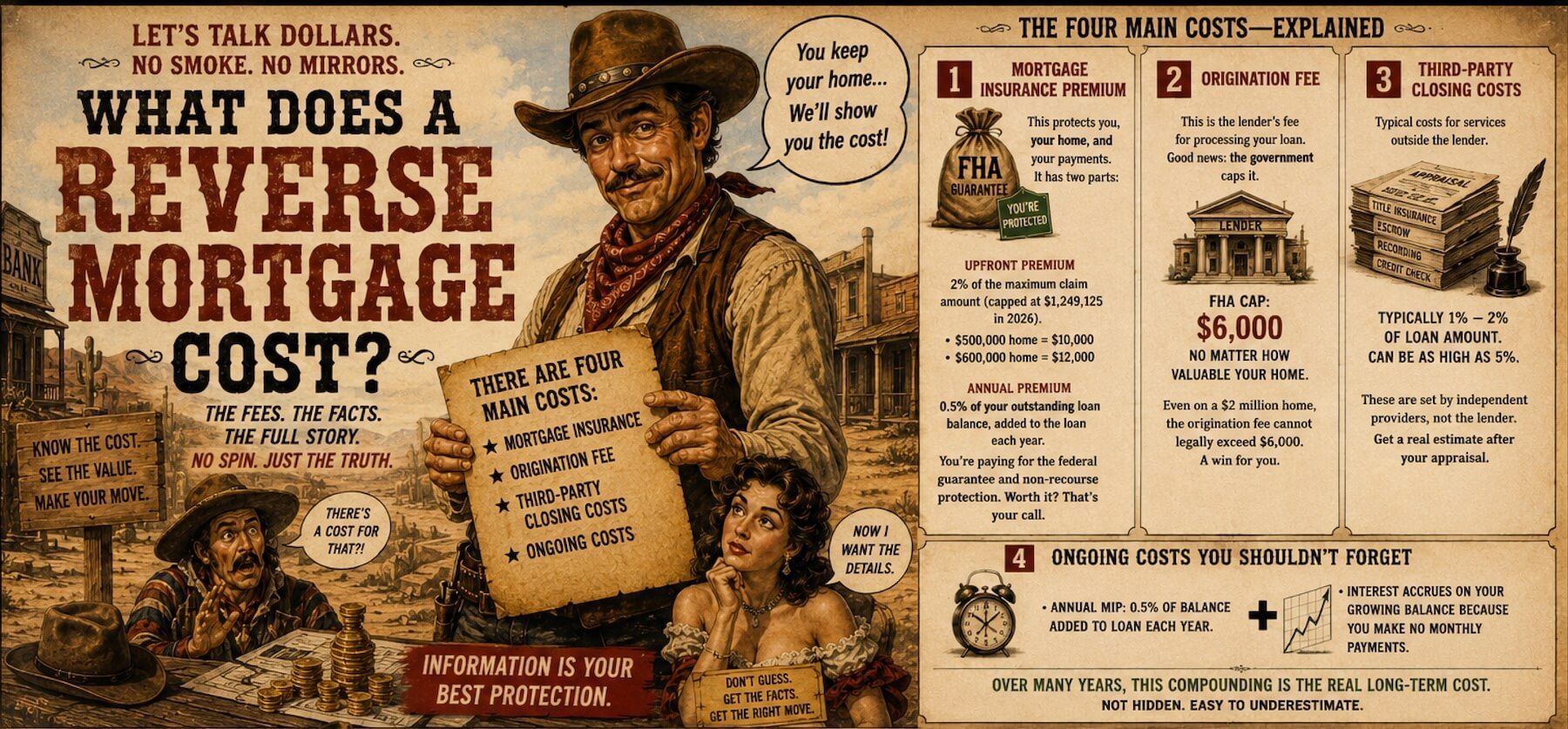
For a federally insured Home Equity Conversion Mortgage, or HECM, the major costs generally include FHA mortgage insurance, an origination fee, third-party closing costs, and ongoing interest and mortgage insurance.
At Green Monarch, we believe every number should be explained before you decide whether a reverse mortgage makes sense for you.
California Reverse Mortgage Costs
Homeowners comparing
California reverse mortgage costs should separate the upfront expenses from the costs that continue after the loan closes. Some costs are connected to the federal HECM program. Others are paid to the lender or independent companies involved in closing the loan. Then there are long-term costs, especially interest that accrues on the loan balance over time. Knowing which cost falls into which category makes the full picture much easier to understand.

FHA Reverse Mortgage Insurance Premium
The FHA reverse mortgage insurance premium is one of the costs that often surprises homeowners when they first review a HECM. Because a HECM is federally insured, borrowers pay into the FHA mortgage insurance program. This insurance provides important protections, including the non-recourse feature of the loan.
The mortgage insurance described in Green Monarch's guide has two parts:
- Upfront mortgage insurance premium: A one-time premium equal to 2% of the maximum claim amount, subject to the applicable federal HECM lending limit.
- Annual mortgage insurance premium: 0.5% of the outstanding loan balance, which is added to the loan rather than normally being paid as a separate monthly bill.
This insurance is a real cost. The question is whether the protections provided by the federally insured HECM are valuable for your particular situation.

Reverse Mortgage Origination Fee
The lender's reverse mortgage origination fee covers work involved in processing and originating the HECM. Unlike an unlimited percentage-based charge, the HECM origination fee is subject to a federal cap. Green Monarch's existing guide identifies the maximum origination fee as $6,000, even when the home's value is substantially higher.
That makes the origination fee easier to identify when reviewing an itemized loan estimate.
Reverse Mortgage Closing Costs
Typical reverse mortgage closing costs include services provided by independent companies needed to complete the transaction.
These can include an appraisal, title insurance, escrow services, recording fees, and a credit check. Because these charges are set by outside providers and can vary by property and transaction, an exact all-in closing-cost figure may not be known before the necessary third-party work is completed.
California homeowners should ask to see these charges clearly itemized rather than relying on a single estimated number.
Ongoing Reverse Mortgage Costs
The most important ongoing reverse mortgage costs can become more significant the longer the loan remains in place.
The annual FHA mortgage insurance premium continues to apply to the outstanding balance. Interest also accrues because a reverse mortgage generally does not require the borrower to make monthly principal and interest payments.
As the loan balance grows, interest can compound over time. That long-term accumulation is important to understand because it may ultimately matter more than some of the individual fees charged at closing. It is not a hidden cost, but it can be underestimated when someone focuses only on what it costs to start the loan.
Are Reverse Mortgages Expensive?
Homeowners asking whether reverse mortgages are expensive deserve more than a simple yes or no.
A reverse mortgage has real costs. But a higher upfront cost does not automatically make a financial product wrong for you, just as a lower upfront cost does not automatically make another option better.
The more useful question is what you receive in return, how long you expect to use the loan, what alternatives are available, and whether the benefits and protections support your retirement goals.
If a fee or number is unclear, ask for an explanation before moving forward.


Orange County Reverse Mortgage Cost Review
For local homeowners, an Orange County reverse mortgage cost review should show the complete numbers before asking you to make a decision.
Green Monarch is located in San Clemente and focuses exclusively on California reverse mortgages. We can walk you through the upfront mortgage insurance, origination fee, estimated third-party closing costs, ongoing insurance, interest, and how those costs may affect the loan over time.
The goal is not to convince every homeowner that a reverse mortgage is right for them. It is to make sure you understand what it costs, what those costs provide, and how the numbers apply to your specific home and circumstances.
Call Green Monarch at 800-345-2041 for a full, itemized California reverse mortgage cost breakdown with no obligation.