

What Is the Interest Rate on a Reverse Mortgage?
There is no single reverse mortgage interest rate that applies to every California homeowner or stays the same for every new loan. That surprises many people. We are used to asking, "What's the rate?" and expecting one number. Reverse mortgages work differently.
Rates can change with the financial markets, and your actual rate depends on factors that include whether you choose a fixed or adjustable-rate HECM, the market index, and the lender's margin. For California homeowners, including those in Orange County, understanding how the rate is created may be more useful than memorizing today's number.
At Green Monarch, we believe you should understand the numbers before making a decision.
California Reverse Mortgage Interest Rates
Homeowners researching California reverse mortgage interest rates should understand that the rate available today may not be the rate available several weeks from now.
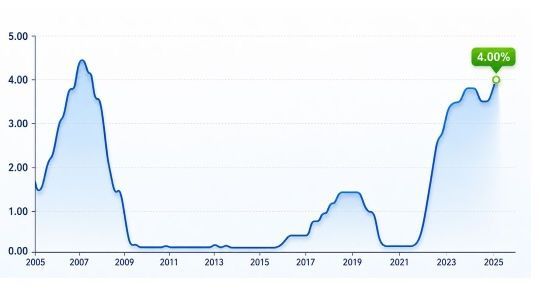
Adjustable HECM rates are connected to the bond market and update regularly. That is why an article quoting a specific rate can become outdated quickly. Instead, start by understanding the two basic choices: fixed and adjustable.
As of mid-June 2026, adjustable-rate HECMs are running roughly in the high-5% range. But that number will have moved by the time you talk to anyone, because reverse mortgage rates are tied to the bond market and they update weekly.


Fixed Rate Reverse Mortgage
A homeowner considering a fixed rate reverse mortgage receives an interest rate that does not changeduring the life of the loan. The tradeoff is flexibility. With a fixed-rate HECM, the available proceeds are taken as a single lump sum at closing. The fixed option does not provide the same line-of-credit or monthly-payment choices available with an adjustable-rate HECM.
For someone who genuinely needs the available proceeds at once, a fixed rate may be worth considering. For homeowners who want more flexibility in how and when they access their funds, the adjustable option may be more appropriate.
Adjustable Rate Reverse Mortgage
Many homeowners choose an adjustable rate reverse mortgage because it provides more choices for accessing available proceeds. Depending on the loan and borrower circumstances, those options can include a line of credit, monthly payments, or a combination.
An important distinction is that interest accrues on funds that have actually been advanced, rather than simply on an unused amount that remains available through a line of credit. But how is that adjustable interest rate determined? It is easier to understand than it sounds.

How Is a Reverse Mortgage Interest Rate Calculated?
To understand how a reverse mortgage interest rate is calculated, start with two components: the index and the margin.

The Index
The index is a published market rate. For the HECM described in Green Monarch's guide, it is tied to the Constant Maturity Treasury, or CMT, and changes as the bond market moves.
The lender does not control that market index.
The Margin
The margin is different. The lender adds a set margin to the index. Unlike the index, the margin is established by the lender and remains unchanged over the life of the loan.
Index + Margin = Interest Rate
That makes the margin an important number to understand when comparing reverse mortgage lenders.


Reverse Mortgage Insurance Premium
HECMs are FHA-insured. Green Monarch's guide explains that an annual FHA mortgage insurance premium of 0.5% applies to the loan balance, making the effective accrual more than the note rate alone.
This is why comparing reverse mortgages based only on an advertised interest rate can leave out an important part of the picture.
What Reverse Mortgage Rate Will I Get?
California homeowners asking what reverse mortgage rate will I get should be cautious of anyone promising an exact rate without first understanding their situation. Your actual rate depends on the market index when you apply, the lender's margin, and whether you select a fixed or adjustable option.
Rather than focusing on one advertised number, compare the:
• Index
• Lender margin
• Note rate
• Expected rate
• FHA mortgage insurance premium
• Fixed versus adjustable options
• Available payout choices
Those numbers together provide a much clearer picture.

Orange County Reverse Mortgage Rate Help
For homeowners throughout Orange County, getting an Orange County reverse mortgage explanation should mean more than being handed a rate sheet. Green Monarch is located in San Clemente and works exclusively with California reverse mortgages. Our goal is to explain the choices, numbers, and tradeoffs clearly so homeowners can decide what makes sense for their retirement plans. Green Monarch can provide a live, itemized rate quote showing the index, margin, expected rate, and insurance premium for your specific situation, with no obligation.
Call Green Monarch at
800-345-2041 to discuss current
California reverse mortgage rates and your available options.