

What People Wish They Knew Before Getting a Reverse Mortgage
Learning what people wish they knew before getting a reverse mortgage can help you ask better questions before you ever sign the loan.
Here's something useful about reverse mortgage regret:
It's remarkably predictable.
Many of the problems borrowers report later tend to center around the same handful of misunderstandings.
Green Monarch's original article draws from a Consumer Financial Protection Bureau analysis of roughly 1,200 reverse mortgage complaints submitted between December 2011 and December 2014. Reading those complaints is a lot like reading a list of questions borrowers wish they had asked before getting their loans.
That's what makes these experiences valuable.
You can learn from them
before making your own decision.
Reverse Mortgage Info You Should Know Before Applying
The most valuable reverse mortgage info isn't necessarily how much money you can receive today.
It's understanding what the loan may look like years from now.
A reverse mortgage is a long-term financial product involving your home equity. That means you should understand not only the immediate benefits, but also what happens to your equity, how interest affects the balance, what happens to your spouse, who services the loan, what can cause it to become due, and what happens if your plans change.
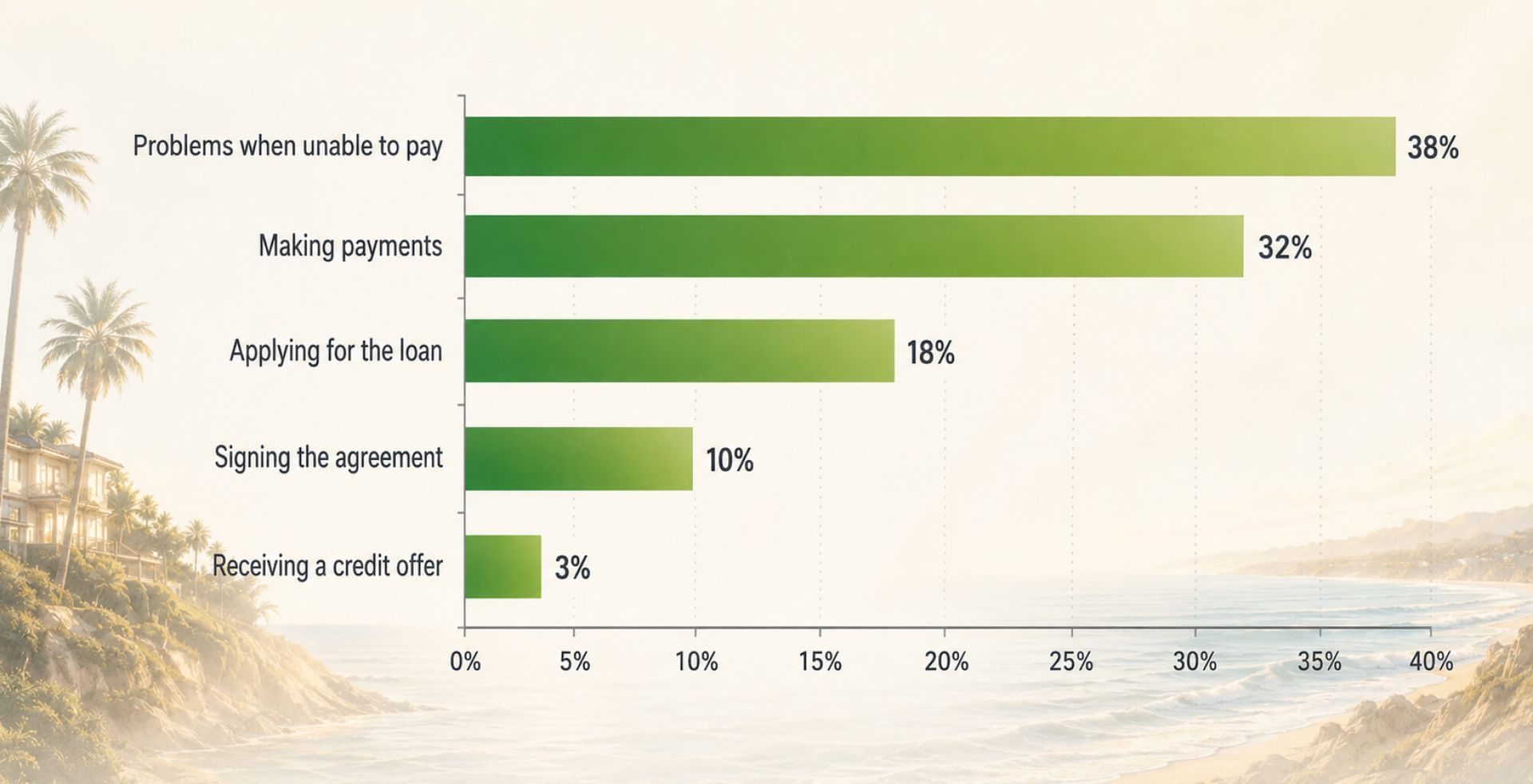
The chart on page 2 of Green Monarch's original article illustrates the CFPB complaint categories. The largest categories shown were problems when unable to pay at 38% and making payments at 32%, followed by applying for the loan, signing the agreement and receiving a credit offer.
Those complaints provide an important lesson:
Don't evaluate a reverse mortgage based only on what happens on closing day.
Reverse Mortgage Facts About Your Home Equity
One of the most important reverse mortgage facts is also one borrowers may underestimate:
Your remaining equity can decrease over time.
With a reverse mortgage, you generally aren't making required monthly principal and interest payments. Interest is added to the loan balance instead.
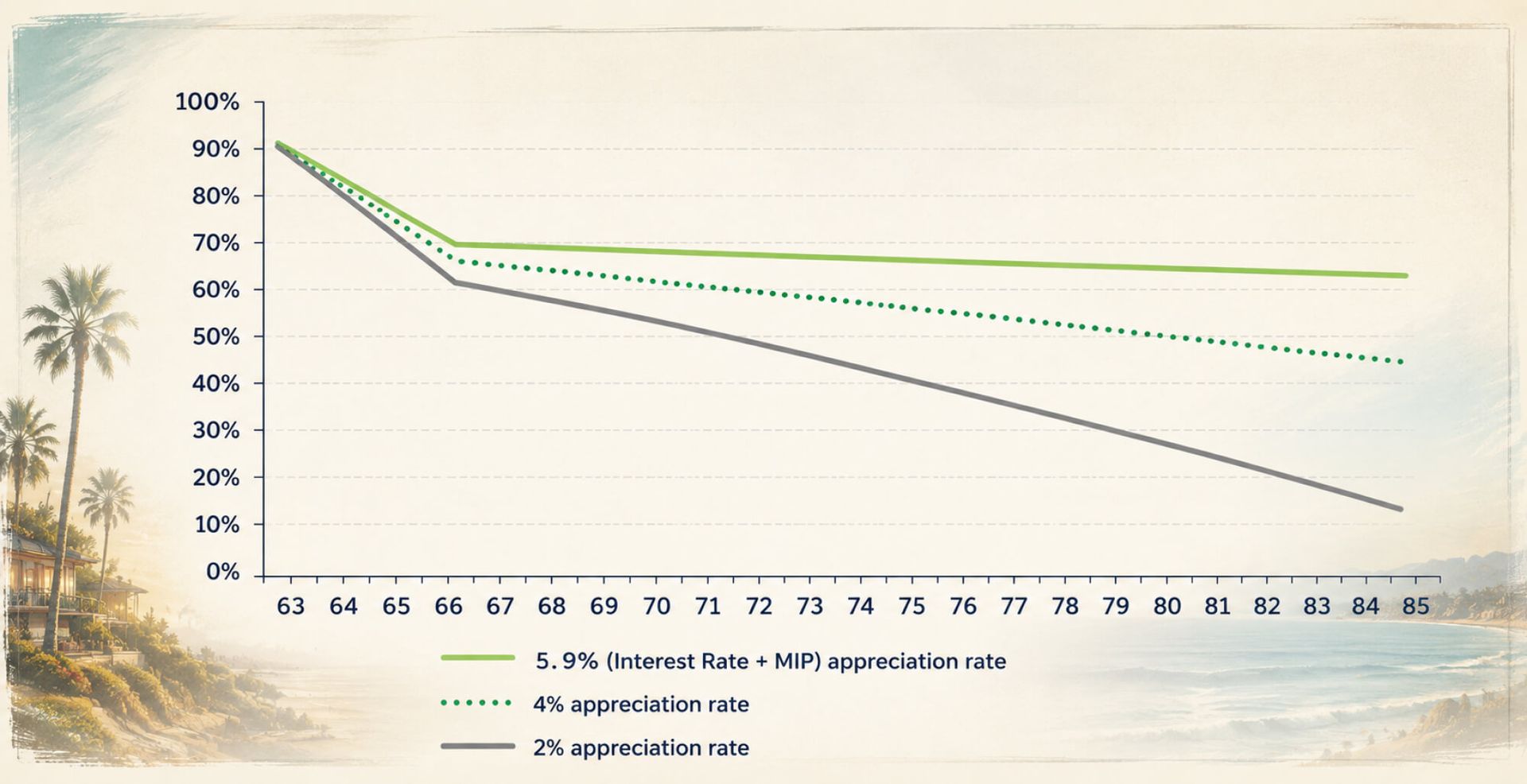
As the balance increases, your share of the home's equity can decrease, even if the property's value increases.
Green Monarch's source highlights a CFPB example involving a 62-year-old homeowner with a $175,000 home, 4% annual appreciation and a 5.9% loan rate. By age 67, the modeled home value had risen to approximately $212,914, while the homeowner's equity had fallen to roughly 64% of the property's value.
The house went up.
The homeowner's share of it went down.
That's not necessarily something going wrong with the loan. It is part of understanding how a reverse mortgage balance can change over time.
How Much Equity Will I Have Left With a Reverse Mortgage?
Before getting a reverse mortgage, how much equity will I have left is a question worth asking your lender.
Don't ask for only today's numbers.
Ask for projections.
What might your loan balance and remaining equity look like in 5 years?
What about 10 years?
What about 20 years?
Green Monarch specifically recommends asking lenders to show projected equity over those time periods.
These projections cannot predict exactly what your home will eventually be worth, but they can help you understand how different assumptions could affect your remaining equity.
That's particularly important if leaving the home or its equity to your heirs is part of your financial planning.
Information Regarding Reverse Mortgages and Your Spouse
One piece of information regarding reverse mortgages that should be settled before closing involves your spouse.
Green Monarch's source discusses complaints involving borrowers who said loan officers falsely told them they could simply add a spouse as a borrower later.
According to the source, you generally cannot.
That's why Green Monarch recommends getting your spouse's status correct at closing and in writing rather than assuming the situation can easily be changed years later.
Ask:
What happens to my spouse if I die first?
And don't settle for only a verbal answer.
Ask where the answer appears in your loan documents.
Can I Add My Spouse to a Reverse Mortgage Later?
If you're wondering can I add my spouse to a reverse mortgage later, don't make your plans based on an assumption that this will be easy or even possible.
The spouse issue is especially important because a mistake may not become apparent until years after the loan closes.
By then, the consequences can be much more difficult to address.
Your spouse's status should be understood before closing, including whether your spouse is a borrower, a non-borrowing spouse, and what protections or requirements apply to your particular situation.
Get the answer before you sign. Get it in writing.
Reverse Loans Information About Loan Servicing
An often-overlooked part of reverse loans information involves something that may seem boring when you're shopping for the loan:
Who will service it?
The company helping you close your reverse mortgage may not necessarily be the company you deal with years later.
Green Monarch's source notes that the CFPB identified complaints involving communication with loan servicers, difficulty changing loan terms, problems paying off loans that had become due, inaccurate records and unresponsive servicers.
So before signing, ask:
Who services this loan?
Then ask:
What happens if my loan is sold or transferred?
It may not sound like the most exciting reverse mortgage question today.
Years from now, it could become one of the most important.
What Happens When a Reverse Mortgage Becomes Due?
Understanding what makes a reverse mortgage become due should happen before you take out the loan.
Death is not the only circumstance you should discuss.
Ask your lender what happens if you move.
Ask what happens if the home is no longer your primary residence.
Ask about your continuing obligations under the loan.
Ask what happens if the loan becomes due and how the payoff process works.
Green Monarch specifically includes this among the questions borrowers should bring to a lender:
"What triggers the loan becoming due besides my death?"
That's an excellent question because it forces the conversation beyond the immediate benefits of getting the loan.
California Reverse Mortgage Information About Long-Term Costs
For homeowners researching California reverse mortgage information, long-term cost deserves as much attention as the amount available upfront.
The right question isn't simply:
"What does this cost me today?"
Also ask:
"What could this cost if my plans change?"
Green Monarch recommends specifically asking what the total cost could look like if you move in seven years rather than keeping the loan for twenty years.
This matters because:
- Retirement plans change.
- Health changes.
- Families change.
- People move.
A loan that makes sense under one timeline may look different under another.
Understanding multiple scenarios before closing can help prevent unpleasant surprises later.

Using a Reverse Mortgage to Delay Social Security
Some homeowners investigate using a reverse mortgage to delay Social Security as part of a broader retirement strategy.
Green Monarch's source intentionally presents both sides of this issue.
It cites a 2017 CFPB report that questioned whether using reverse mortgage proceeds to delay claiming Social Security was financially beneficial for a typical borrower. The report concluded that, under the assumptions it examined, loan costs could exceed the additional lifetime Social Security benefits generated by delaying the claim.
But Green Monarch's source also explains that the CFPB analysis was criticized within the retirement industry.
Retirement researcher Jamie Hopkins argued that the methodology used an unfair comparison between future-value loan costs and present-value Social Security benefits.
That's an important example of why financial strategies shouldn't be reduced to one sales line.
Understand the assumptions behind the recommendation.

What Questions Should I Ask Before Applying for a Reverse Mortgage?
For anyone asking
what questions should I ask before applying for a reverse mortgage, Green Monarch's source provides a particularly useful starting point.
Bring these questions with you:
- Show me my projected equity in 5, 10 and 20 years, not just today's number.
- What happens to my spouse if I die first, and where is that explained in writing?
- Who will service this loan, and what happens if the loan is sold or transferred?
- What can cause the reverse mortgage to become due besides my death?
- What could the total cost look like if I move in seven years instead of staying for twenty?
These aren't trick questions.
A knowledgeable reverse mortgage lender should be willing to answer them.
Reverse Mortgage Information for Orange County Homeowners
For Orange County homeowners researching reverse mortgage information, home value alone should not drive the decision.
California homeowners may have substantial equity built up in their properties.
That makes understanding what happens to that equity over time especially important.
If preserving equity matters to you, say so.
If remaining in your home long-term matters most, say that.
If your spouse's future is a major concern, make it part of the discussion.
If you're primarily interested in cash flow, explain that.
The reverse mortgage should be evaluated around what you're trying to accomplish, not the other way around.
Reverse Mortgage Facts People Often Learn Too Late
Some reverse mortgage facts people learn too late are exactly the things worth understanding before signing.
Your loan balance can grow.
Your remaining equity can decrease.
Your spouse's status matters.
Your loan may eventually be serviced by a different company.
Your plans may change before the loan reaches the timeline you originally expected.
And a financial strategy that sounds attractive should still be tested against its actual long-term costs.
The infographic on page 4 of Green Monarch's source captures the bigger lesson well: know the real cost, read everything carefully, plan for the long term, ask questions and get answers.
The goal isn't to make a reverse mortgage sound good or bad.
The goal is to understand it before deciding.

Don't Wait Until After Closing to Ask the Important Questions
The best reverse mortgage information for California homeowners should help you understand both what the loan can do and what you could wish you had known later.
Green Monarch's original article was built around actual areas of borrower frustration documented in public records.
That makes the lesson simple:
Ask tomorrow's questions today.
Ask about your future equity.
Ask about your spouse.
Ask about servicing.
Ask what causes the loan to become due.
Ask about costs under different timelines.
Ask why a particular payout structure is being recommended.
Green Monarch's educational approach is to discuss the costs, rates and honest downsides along with the potential benefits, so homeowners can make a decision based on more than a sales pitch.
When you're ready to talk through your questions, call
Green Monarch at (800) 345-2041.
Frequently Asked Questions
SOURCES