
What’s the Catch with a Reverse Mortgage?
When people ask What’s the Catch with a Reverse Mortgage, the worst answer a lender can give is, “There isn't one.”
There is always a catch.

A reverse mortgage is a financial product with real benefits and real trade-offs.
The key is knowing what those trade-offs are before you get the loan.
For some California homeowners, a reverse mortgage can provide additional financial flexibility while allowing them to remain in their home without required monthly principal and interest mortgage payments.
But that benefit comes with costs, responsibilities and long-term consequences that deserve just as much attention.
So let's skip the sales pitch and talk about the catches.
What Are the Real Reverse Mortgage Issues?
The first thing to understand about reverse mortgage issues is that a reverse mortgage isn't automatically good or bad.
It depends on the homeowner and how the loan is used.
Green Monarch's original article identifies several major trade-offs
homeowners should understand:
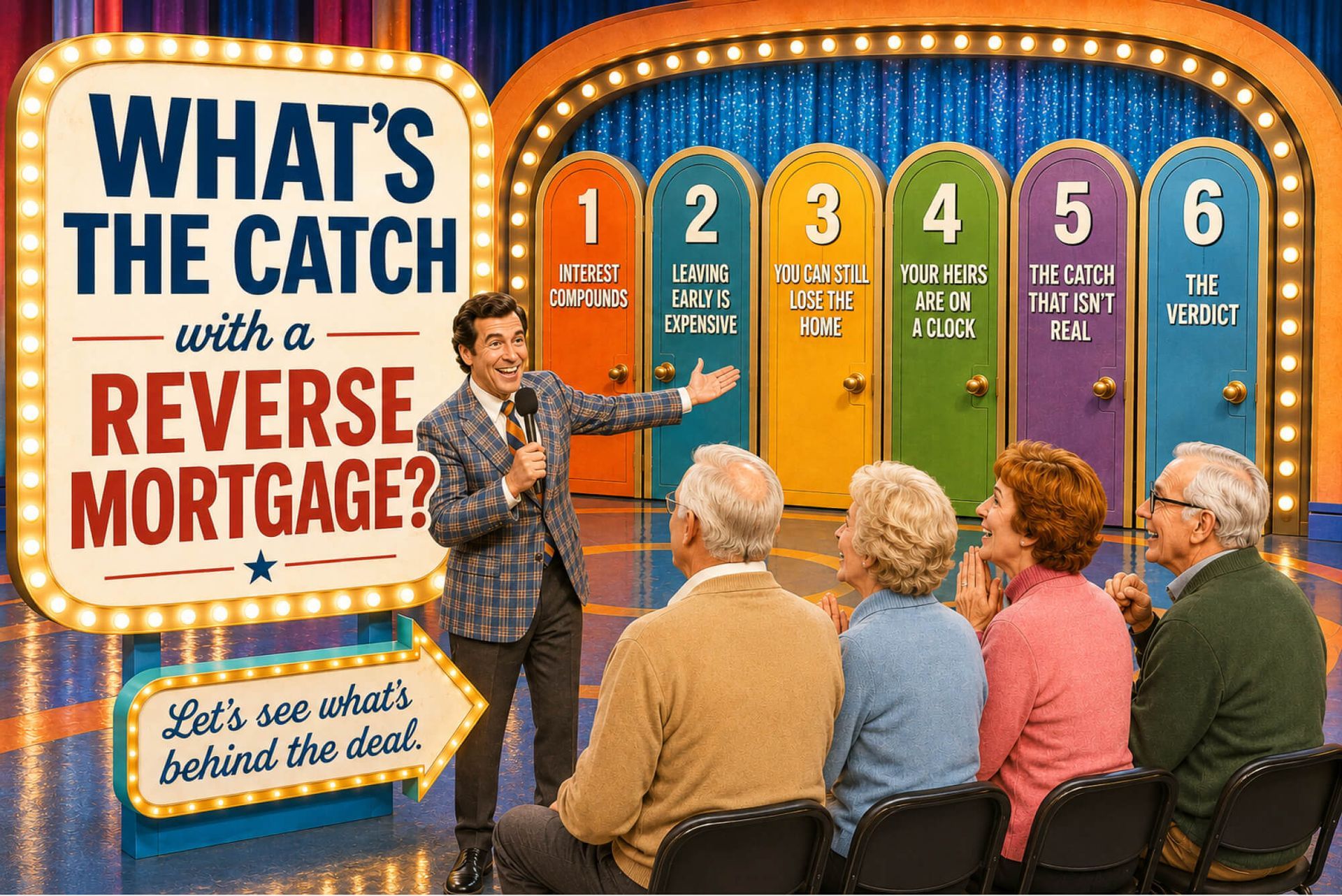
- Interest compounds and can reduce your remaining equity.
- Leaving the loan earlier than expected can make upfront costs more significant.
- You can still lose the home if required loan obligations aren't met.
- Your heirs have deadlines after the loan becomes due.
- Your family does not inherit a HECM shortfall simply because the loan balance exceeds the home's value.
Those are very different issues.
Let's Look at them One at a Time.
Reverse Mortgage Catch #1: Interest Compounds
One of the biggest problems with reverse mortgages for someone who doesn't understand the loan is how interest affects the balance over time.
You generally aren't making required monthly principal and interest mortgage payments.
That's part of the appeal.
But the interest doesn't disappear.
Instead, interest is added to the loan balance, and future interest is then calculated on the larger balance.
In other words:
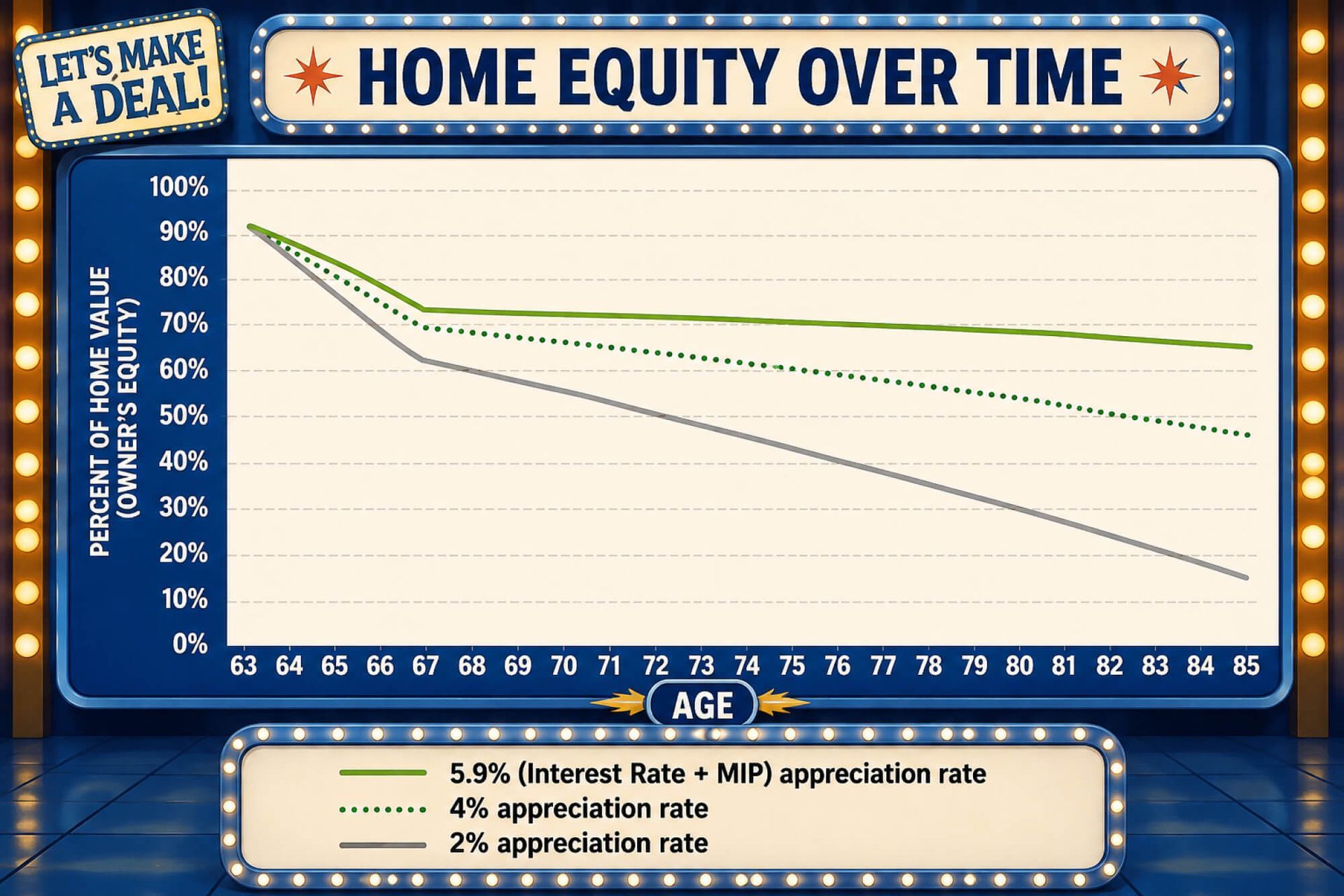
The loan balance can grow while your remaining equity decreases.
Green Monarch's source cites a CFPB model involving a 62-year-old homeowner with a $175,000 home appreciating at 4% annually and a 5.9% loan rate. By age 67, the modeled home value had increased to about $212,914, while the homeowner's equity had decreased to approximately 64% of the home's value.
The home appreciated.
Their share of it shrank.
That's a real trade-off.
Does a Reverse Mortgage Eat Up Your Home Equity?
When asking does a reverse mortgage eat up your home equity, understand that accessing equity today can mean having less equity remaining later.
How much remains will depend on multiple factors, including the amount borrowed, interest, loan costs, how long you keep the loan and what happens to your home's value.
That doesn't automatically make a reverse mortgage a poor decision.
You're exchanging some future equity for a financial benefit today.
The important part is understanding that exchange before making it.
If preserving as much home equity as possible for your heirs is one of your highest priorities, tell your lender.
Don't judge the loan only by how much money you can receive. Ask what it could do to your equity over time.
Reverse Mortgage Catch #2: Leaving Early Can Be Expensive
Another significant reverse mortgage issue is what happens if you don't keep the loan as long as originally expected.
Reverse mortgages can have substantial upfront costs.
Green Monarch's source specifically identifies the 2% upfront mortgage insurance premium, origination fee and third-party closing costs.
Those expenses don't automatically shrink because you decide to sell the home or end the loan earlier.
That's why the length of time you realistically expect to remain in the home matters.
The original article gives a useful illustration:
Spread $12,000 in upfront costs over 20 years and the economics look very different than spreading those same costs over only four years.
If there's a meaningful possibility that you'll move within several years,
the upfront costs deserve serious consideration.

What Happens if I Move After Getting a Reverse Mortgage?
For homeowners asking what happens if I move after getting a reverse mortgage, your future plans matter.
People don't always remain in their homes as long as expected.
- Health can change.
- Family situations can change.
- A spouse can pass away.
You may decide to downsize or move closer to family.
That's why Green Monarch's source emphasizes that a reverse mortgage can become comparatively expensive when the loan ends earlier than expected because many of the costs occur upfront.
Before applying, ask your lender to show you the numbers under more than one timeline.
- What if I stay 20 years?
- What if I move in seven?
- What if I move in four?
Those answers may affect your decision.
Reverse Mortgage Catch #3: You Can Still Lose Your Home
One of the most important problems with reverse mortgages to understand is that having a reverse mortgage does not mean foreclosure becomes impossible.
You still own the home.
And you still have homeowner responsibilities.
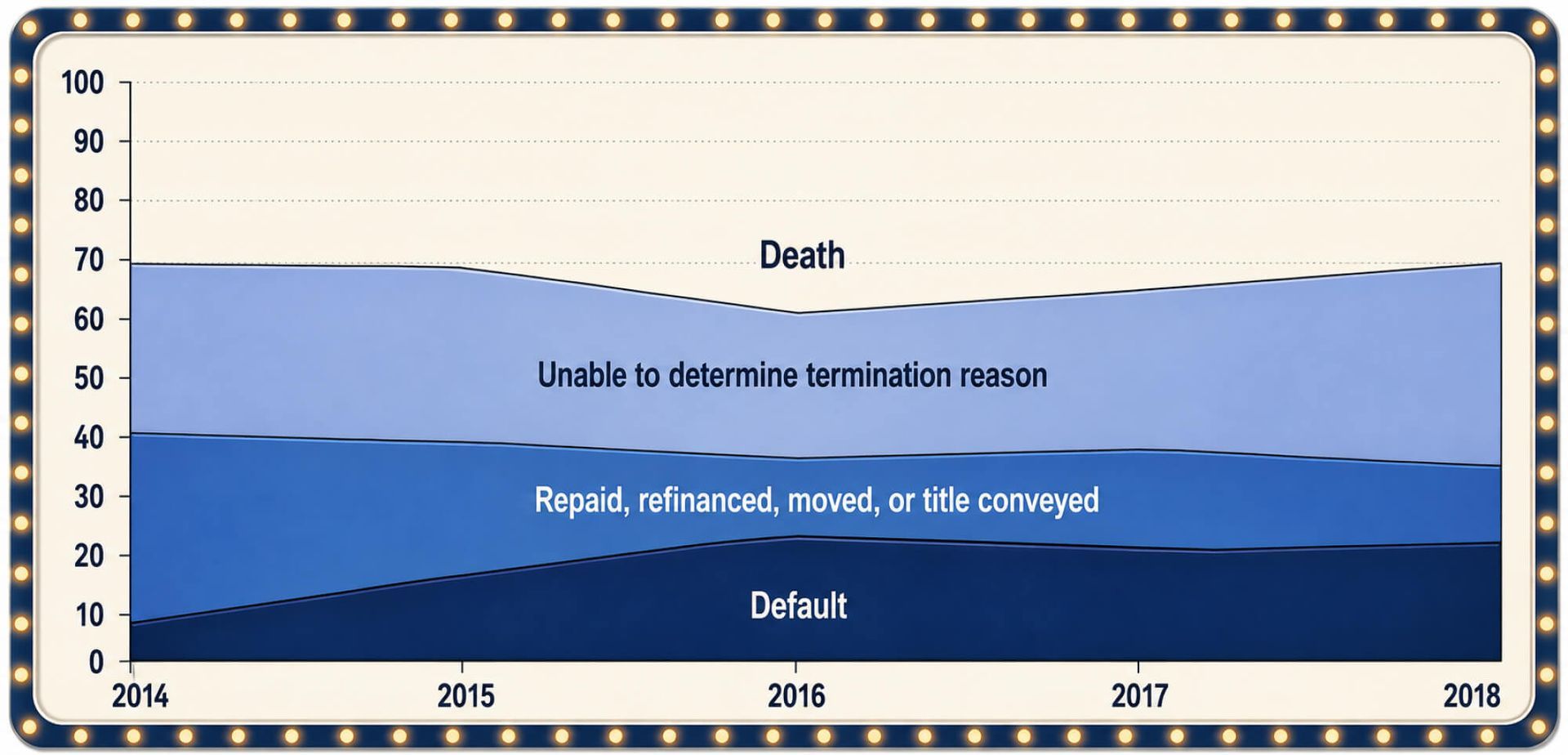
According to Green Monarch's source, borrowers must continue paying property taxes and homeowners insurance, maintain the property and occupy it as their primary residence.
Failure to meet applicable loan conditions can result in default and potentially foreclosure if the problem isn't corrected.
So the statement:
“You can never lose your home with a reverse mortgage”
is not an accurate way to explain the loan.
What Do I Still Have to Pay With a Reverse Mortgage?
The answer to
what do I still have to pay with a reverse mortgage is important because eliminating a required monthly principal and interest mortgage payment does not eliminate the costs of owning your home.
You remain responsible for applicable property charges, including:
- Property taxes
- Homeowners insurance
- Applicable HOA or condominium fees
- Property maintenance
You must also continue meeting the occupancy requirements of the loan.
The source notes that protections for borrowers who fall behind have improved, including changes involving repayment plans and the At-Risk Extension option.
But the better plan is to determine
before getting the loan whether you can comfortably continue handling those expenses.
Reverse Mortgage Catch #4: Your Heirs Are on a Clock
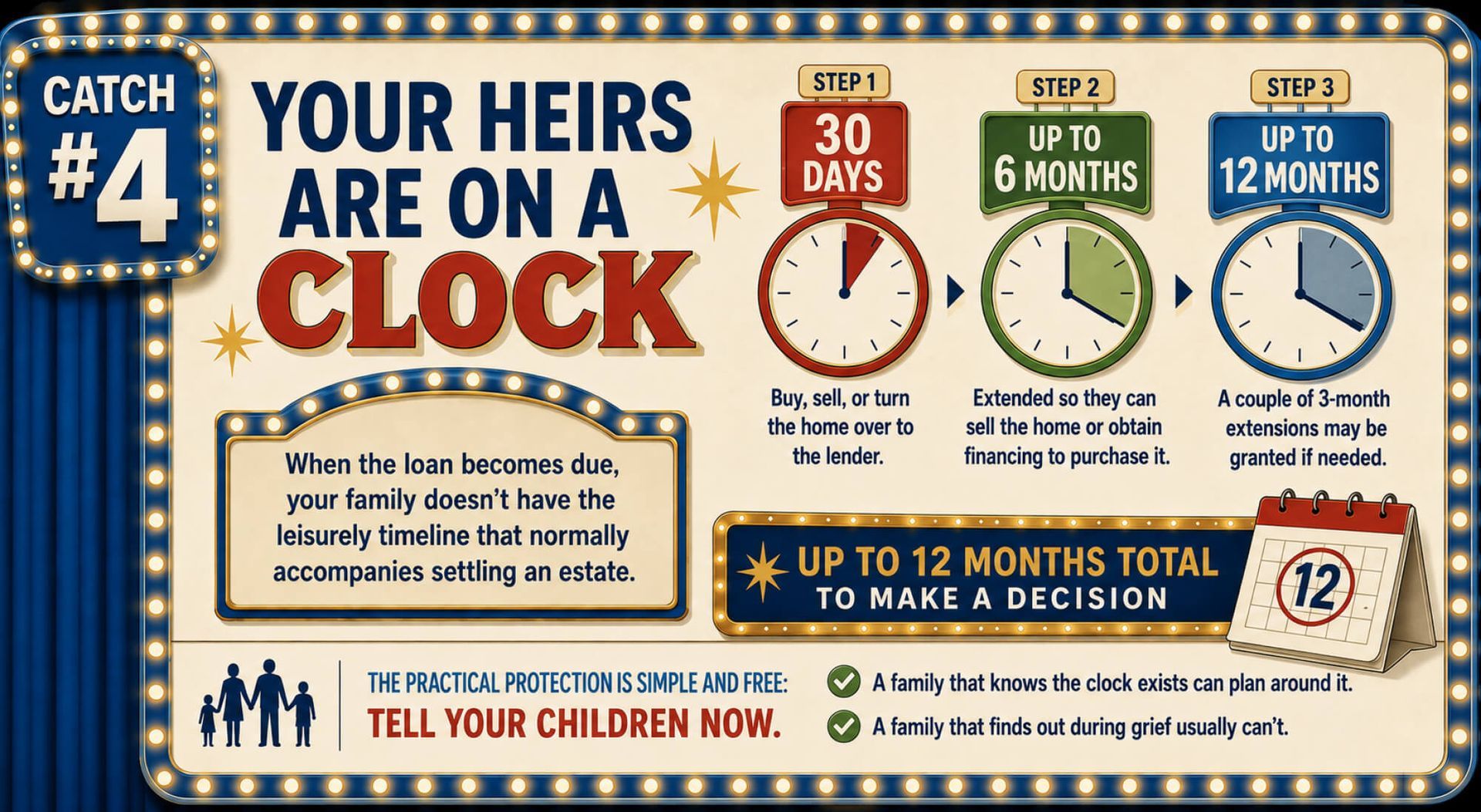
Another reverse mortgage issue families should understand is what happens after the loan becomes due.
Your heirs don't necessarily have an unlimited amount of time to decide what to do with the property.
Green Monarch's source states that after heirs receive a due-and-payable notice, they initially have 30 days to buy, sell or turn the home over to the lender.
The source also explains that extensions may be available, including up to six months to sell the home or obtain financing, with additional three-month extensions potentially allowing as much as a year in total.
The infographic on page 5 of Green Monarch's original article makes the point visually:
Your heirs are on a clock.
There's a simple way to make that situation easier.
Tell your family about the reverse mortgage now.
What Happens to My Reverse Mortgage When I Die?
When considering what happens to my reverse mortgage when I die, include your family in the planning before the loan ever becomes due.
Your heirs generally need to decide whether they want to keep the home, sell it or otherwise resolve the loan.
If they want to keep the property, financing and timing can become important.
If they intend to sell it, they need to understand the applicable deadlines.
A family that already knows the reverse mortgage exists can prepare.
A family that discovers everything while also dealing with the death of a parent or loved one has a much harder situation.
Green Monarch's source puts it simply:
Tell your children now.
The Reverse Mortgage Catch That Isn't Real
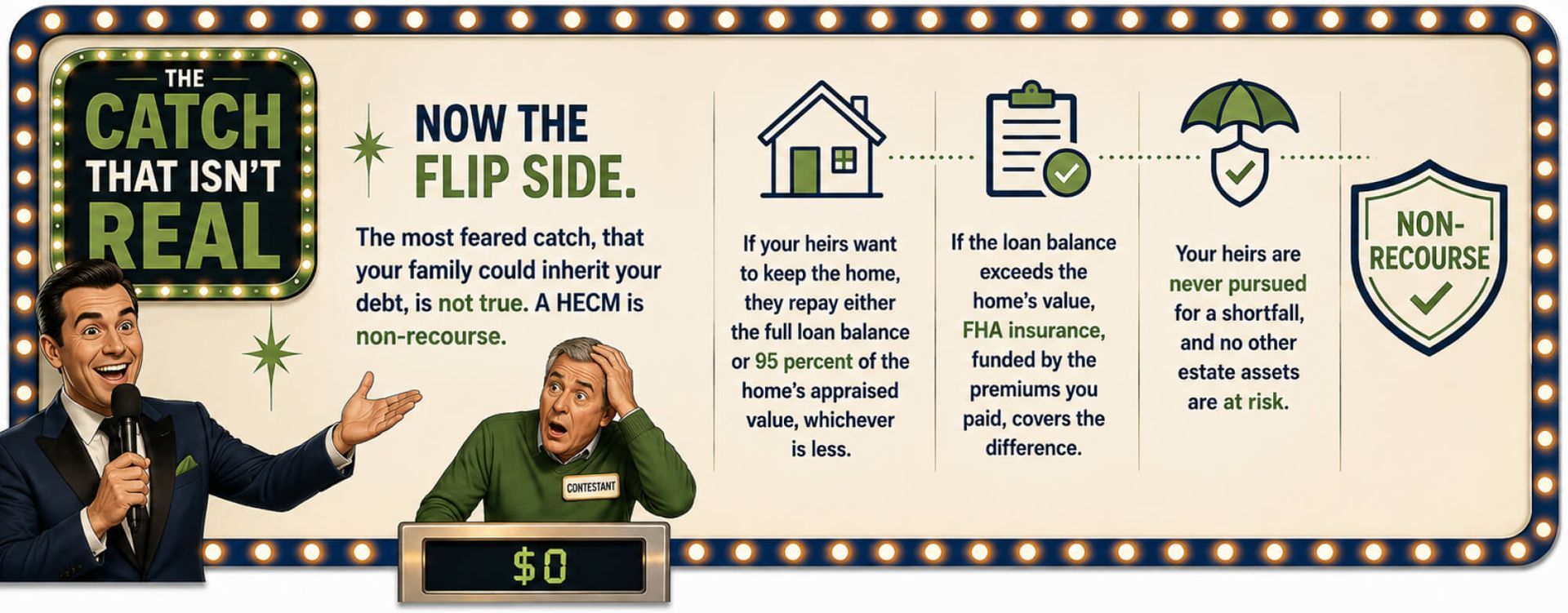
Now let's address one of the biggest reverse mortgage fears that Green Monarch's source says is not a real catch:
Your heirs inheriting your reverse mortgage debt beyond the value of the home.
A HECM is a non-recourse loan.
According to the CFPB information cited in Green Monarch's source, if heirs want to keep the home, they repay either the full loan balance or 95% of the home's appraised value, whichever is less.
If the loan balance exceeds the value of the property, FHA insurance covers the applicable difference.
Green Monarch's source states that the heirs aren't pursued for the shortfall and other estate assets aren't put at risk simply because the HECM balance exceeds the home's value.
That's an important distinction between a
real reverse mortgage problem and a common fear.
Can My Children Inherit Reverse Mortgage Debt?
For a HECM, the fear that my children will inherit my reverse mortgage debt misunderstands the non-recourse protection described above.
Your heirs still have decisions to make about the home and deadlines to meet.
But a loan balance exceeding the home's value does not mean your children simply inherit that excess mortgage debt.
This doesn't mean estate planning is unnecessary.
Quite the opposite.
Talk with your family beforehand about whether anyone expects to keep the home and what would need to happen financially for them to do so.
Planning is better than surprising your heirs later.
Problems With Reverse Mortgages in California
For homeowners researching problems with reverse mortgages in California, the fundamental trade-offs are similar to those homeowners face elsewhere.
But your personal circumstances matter.
A California or Orange County homeowner with substantial equity who plans to remain in the home for many years may evaluate the loan differently from someone expecting to move soon.
Likewise, someone who can comfortably continue paying taxes, insurance and other property expenses is in a different position from someone already struggling to meet those obligations.
The question isn't simply:
“Is a reverse mortgage good or bad?”
A better question is:
“Does this reverse mortgage make sense for my situation?”
When Can a Reverse Mortgage Be a Bad Idea?
A reverse mortgage can be a bad fit when the structure of the loan conflicts with your likely future.
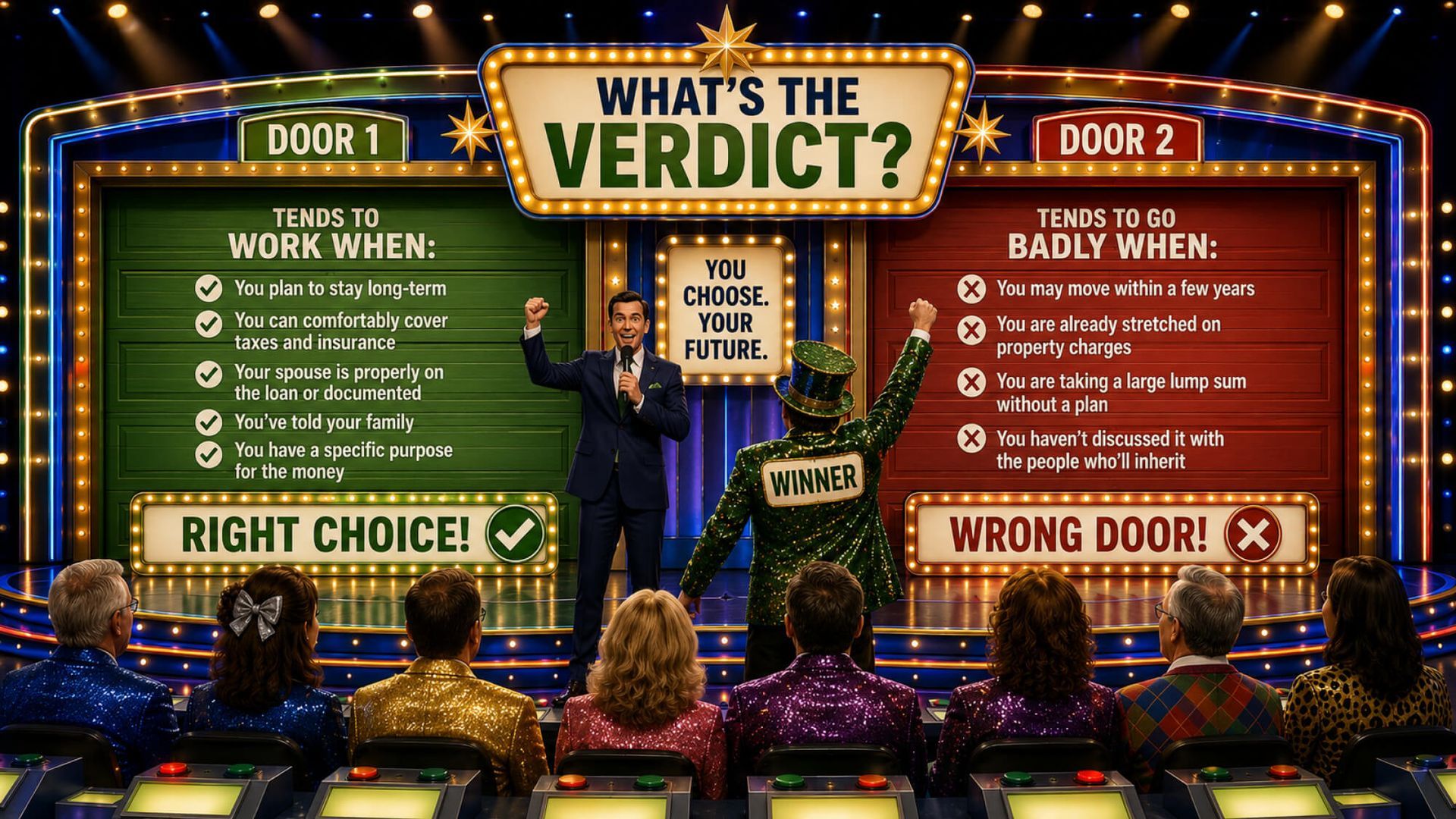
Green Monarch's source identifies several circumstances where the loan tends to go badly:
You may move within a few years.
You're already stretched financially when it comes to property charges.
You're considering taking a large lump sum without a clear plan.
You haven't discussed the reverse mortgage with the people who may eventually inherit the home.
Or you're using the loan to temporarily patch a recurring short-term cash problem.
Those aren't minor considerations.
They're reasons to evaluate the loan very carefully before moving forward.
When Can a Reverse Mortgage Make Sense?
On the other side, a reverse mortgage may work better when your circumstances match the product.
Green Monarch's source says the loan tends to work when you plan to stay in your home long-term, can comfortably cover taxes and insurance, have properly addressed your spouse's status, have discussed the loan with your family and have a specific purpose for the money.
Notice what's missing from that list:
“Because someone told me a reverse mortgage is a great deal.”
The decision should be based on your circumstances, plans and numbers.
So, Whats the Catch With a Reverse Mortgage?
After looking at the real catches with a reverse mortgage, the answer becomes much clearer.
The catch isn't that the lender secretly takes your house.
The catch isn't that your children automatically inherit your debt.
And the catch isn't necessarily that a reverse mortgage is a scam.
The real catches are the trade-offs:
Interest compounds.
Your loan balance can grow and remaining equity can decrease.
Leaving early can make upfront costs more significant.
You still have to pay property charges and meet the loan requirements.
Your heirs have deadlines when the loan becomes due.
Those are real issues.
They should be discussed openly.
Understand the Catch Before You Sign
If you're investigating reverse mortgage issues in California, don't look for a lender who tells you there are no downsides.
Look for one willing to explain them.
Ask what happens to your equity.
Ask what happens if you move earlier than expected.
Ask what expenses remain your responsibility.
Ask what happens to your spouse.
Ask what your children will need to do.
Ask what happens under the worst reasonable scenario, not only the best one.
Green Monarch's original article makes its educational position clear: homeowners should keep researching the costs, rates and honest downsides before deciding whether the trade-offs fit their situation.
When you're ready to talk through whether those catches apply to you, call
Green Monarch at (800) 345-2041.