

Why Do Smart People Get Reverse Mortgages?
Research helps explain the question of why do smart people get reverse mortgages? is really a question about retirement strategy, not financial desperation.
For years, reverse mortgages were often associated with homeowners who had run out of other options. But beginning in 2012, academic researchers with no stake in selling reverse mortgages began studying a very different use for them.
Their research asked whether strategically using home equity could improve retirement outcomes.
The answer got the financial planning profession's attention.
Used in a particular way, a reverse mortgage line of credit could provide retirees with another source of funds during periods when withdrawing from an investment portfolio might be especially damaging.
That research makes a very different case for considering a reverse mortgage.
The Research Behind Reverse Mortgages and Retirement Planning
In 2012, research behind reverse mortgages and retirement planning began challenging some of the conventional thinking about how retirees should use home equity.
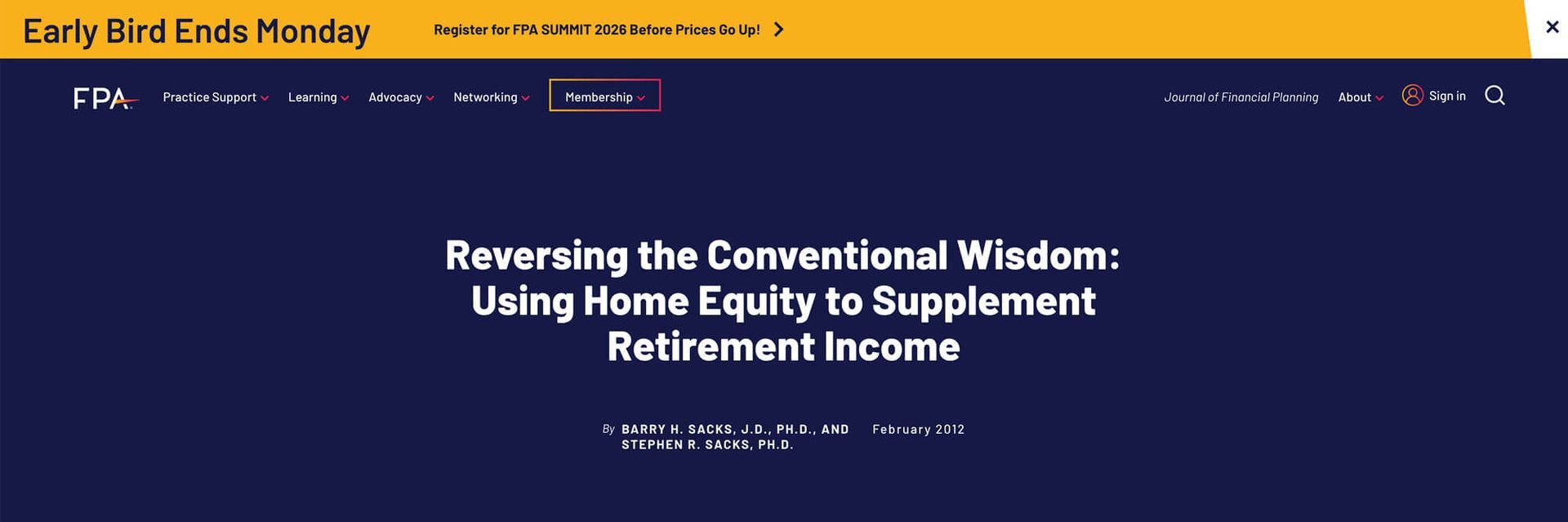
Barry H. Sacks and Stephen R. Sacks published Reversing the Conventional Wisdom: Using Home Equity to Supplement Retirement Income in the Journal of Financial Planning.
Their question was fairly specific.
Retirees who depend on an investment portfolio can face what is known as sequence of returns risk. If a retiree needs to sell investments during a significant market decline, those withdrawals can lock in losses and leave less money invested to participate in a future recovery.
The researchers asked whether a reverse mortgage line of credit could provide an alternative source of funds during those periods.
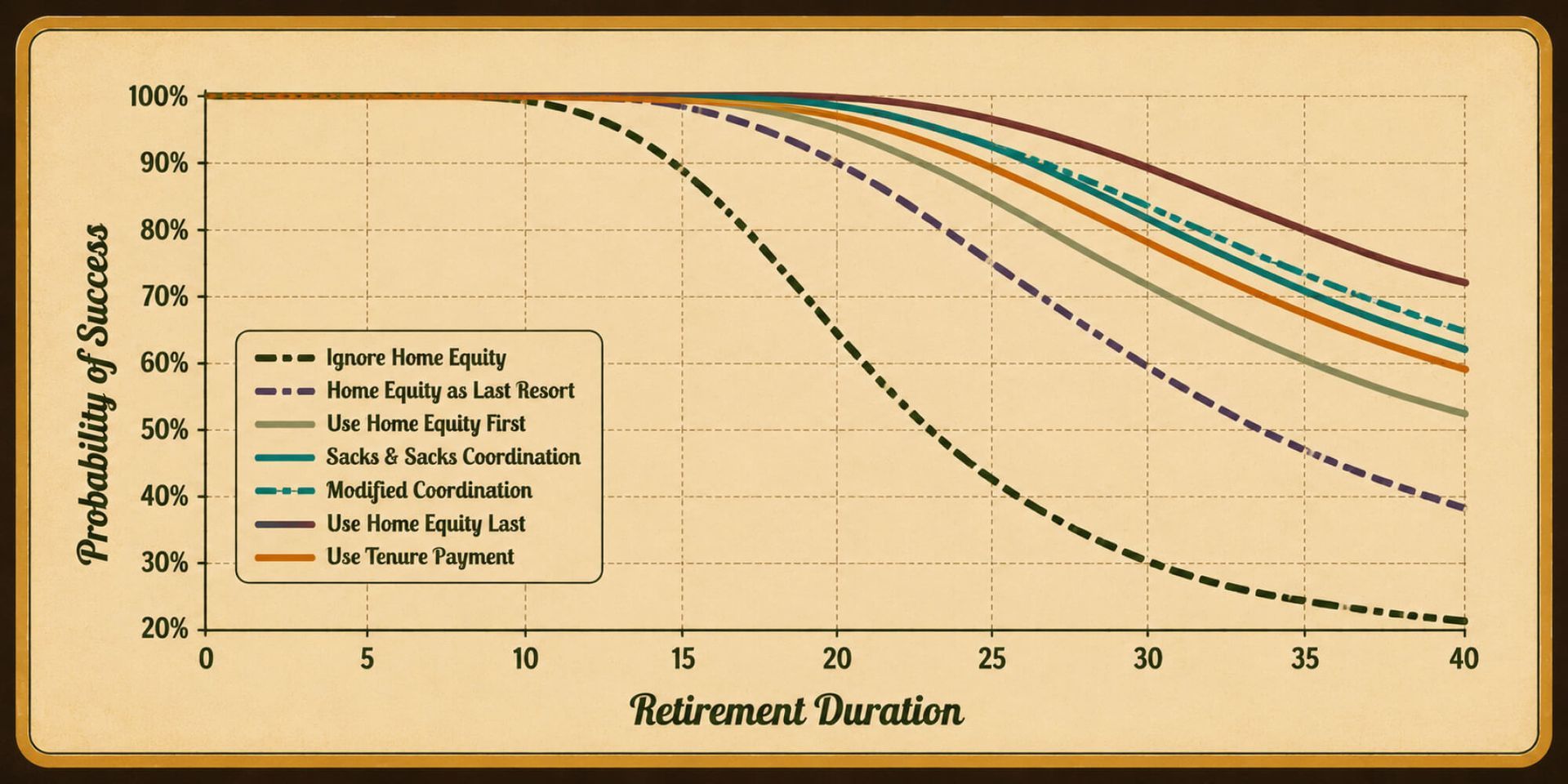
Their findings suggested that actively coordinating a reverse mortgage credit line with portfolio withdrawals could increase cash-flow survival rates and residual net worth compared with waiting until an investment portfolio was exhausted before establishing the credit line.
In plain English, sometimes
where retirement money comes from and when it is withdrawn matters.
A Reverse Mortgage Provides a Line of Credit
For some qualified homeowners, a reverse mortgage provides a line of credit that can be incorporated into a broader retirement strategy rather than immediately spent.
That distinction is important.
The research was not primarily about taking the largest possible amount of cash at closing and spending it. It examined using a reverse mortgage line of credit strategically during retirement.
The Sacks research found that for certain withdrawal-rate goals, residual net worth after 30 years was more likely to be higher under a coordinated strategy than when the reverse mortgage was treated only as a last resort.
A separate research team reached a similar conclusion.
John R. Salter, Shaun A. Pfeiffer and Harold R. Evensky studied a "standby reverse mortgage" strategy. Their research provided independent support for the idea that a reverse mortgage line of credit could help mitigate sequence of returns risk while considering legacy goals.
That does not mean the strategy is right for every homeowner.
It means home equity can be evaluated as
one part of a retirement plan, rather than automatically being treated as an asset that should never be touched.
HECM Line of Credit in California
For eligible homeowners, an HECM line of credit in California can offer a feature that helps explain why this particular reverse mortgage option receives attention in retirement research.
HECM stands for Home Equity Conversion Mortgage.
One important feature discussed in the research is that the unused portion of a HECM line of credit can grow over time. Green Monarch's original material explains that this growing available line can potentially be used to help reduce the impact of portfolio losses early in retirement.
Consider the basic idea.
Suppose the stock market experiences a significant decline during retirement. The homeowner needs money for living expenses, but selling investments during that downturn could mean realizing losses.
If an available HECM line of credit is part of the homeowner's established retirement strategy, it may provide another source of funds.
That could allow some investments additional time to recover rather than requiring them to be sold during an unfavorable market period.
This is the
standby strategy examined by retirement researchers.
Why Establish a Reverse Mortgage Line of Credit Early?
The research behind establishing a reverse mortgage line of credit early examines a strategy that can seem counterintuitive at first.
The idea is not necessarily:
"I need money, so I should get a reverse mortgage."
Instead, the thinking may be:
"I want another financial option available before I need it."
The original Green Monarch article describes the research pattern this way: informed borrowers may establish the line earlier and leave it unused, allowing the available line to grow while it remains untouched.
That changes the role of the reverse mortgage.
Instead of being viewed only as an emergency source of money, the line of credit can potentially become another financial resource available within a larger retirement plan.
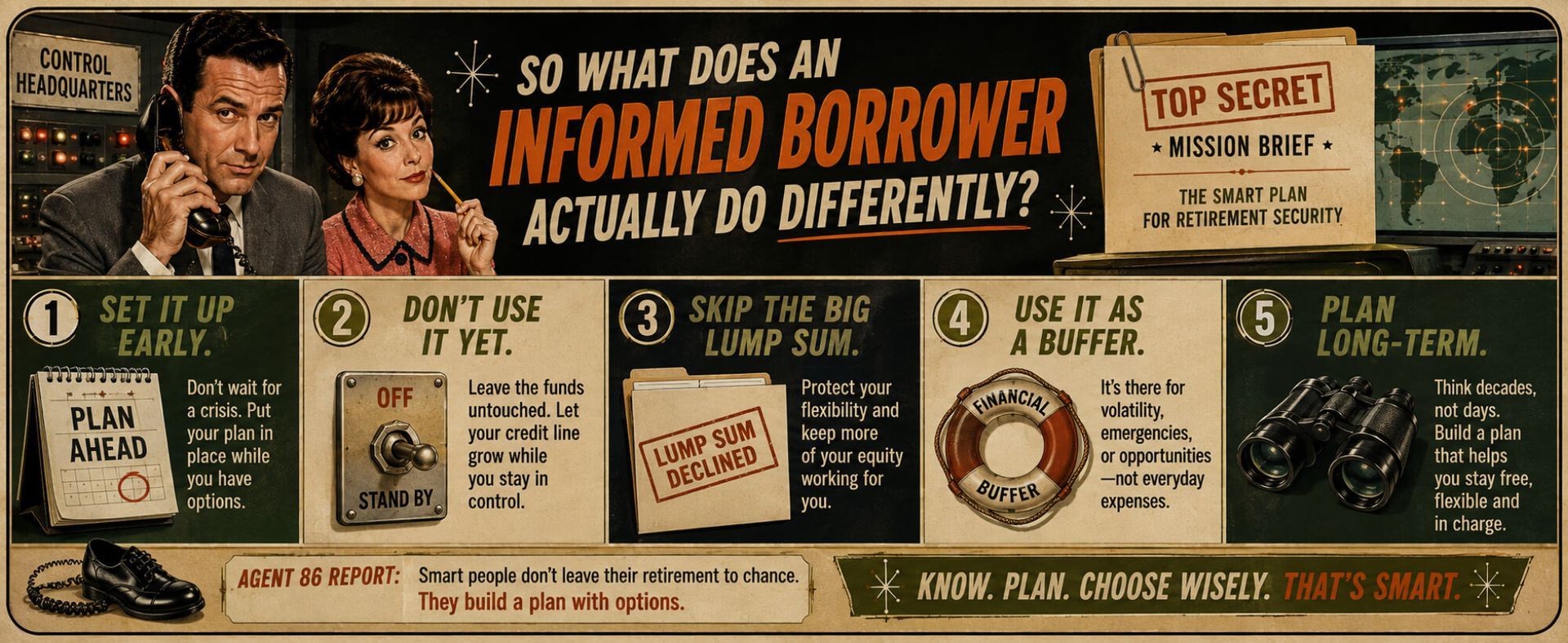
How Informed Borrowers May Use a Reverse Mortgage Differently
The research suggests
informed borrowers may use a reverse mortgage differently from the way these loans were historically perceived.
The strategies discussed in Green Monarch's original article include:
- Establishing the line early without immediately using it.
- Avoiding a large lump-sum withdrawal when the purpose is to maintain a standby credit line.
- Treating the line as a risk-management tool, rather than simply additional spending money.
- Using it as a potential buffer during difficult market years.
- Planning to remain in the home long-term, so the upfront costs are considered within a longer time horizon.
That is very different from getting a reverse mortgage simply because money is needed immediately.
It is also why the decision needs to be based on the homeowner's complete financial circumstances.
Benefits of Informed Reverse Mortgage Lenders
The potential
benefits of informed reverse mortgage lenders go beyond explaining how much money a homeowner may qualify to receive.
An informed conversation should also address why the homeowner is considering the loan.
- Is the goal immediate cash flow?
- Is it establishing a standby line of credit?
- Is the homeowner concerned about withdrawing investments during a market downturn?
- How long does the homeowner expect to remain in the home?
- What are the costs?
- What alternatives should also be considered?
A reverse mortgage should not become the goal of the conversation. The homeowner's financial objective should come first, with the reverse mortgage evaluated as one possible way to address it.
Is a Reverse Mortgage Only for People in Financial Trouble?
The idea that a reverse mortgage is only for people in financial trouble misses the central point of the retirement research discussed here.
The studies examined strategic use of home equity, particularly a standby line of credit, as part of retirement-income planning.
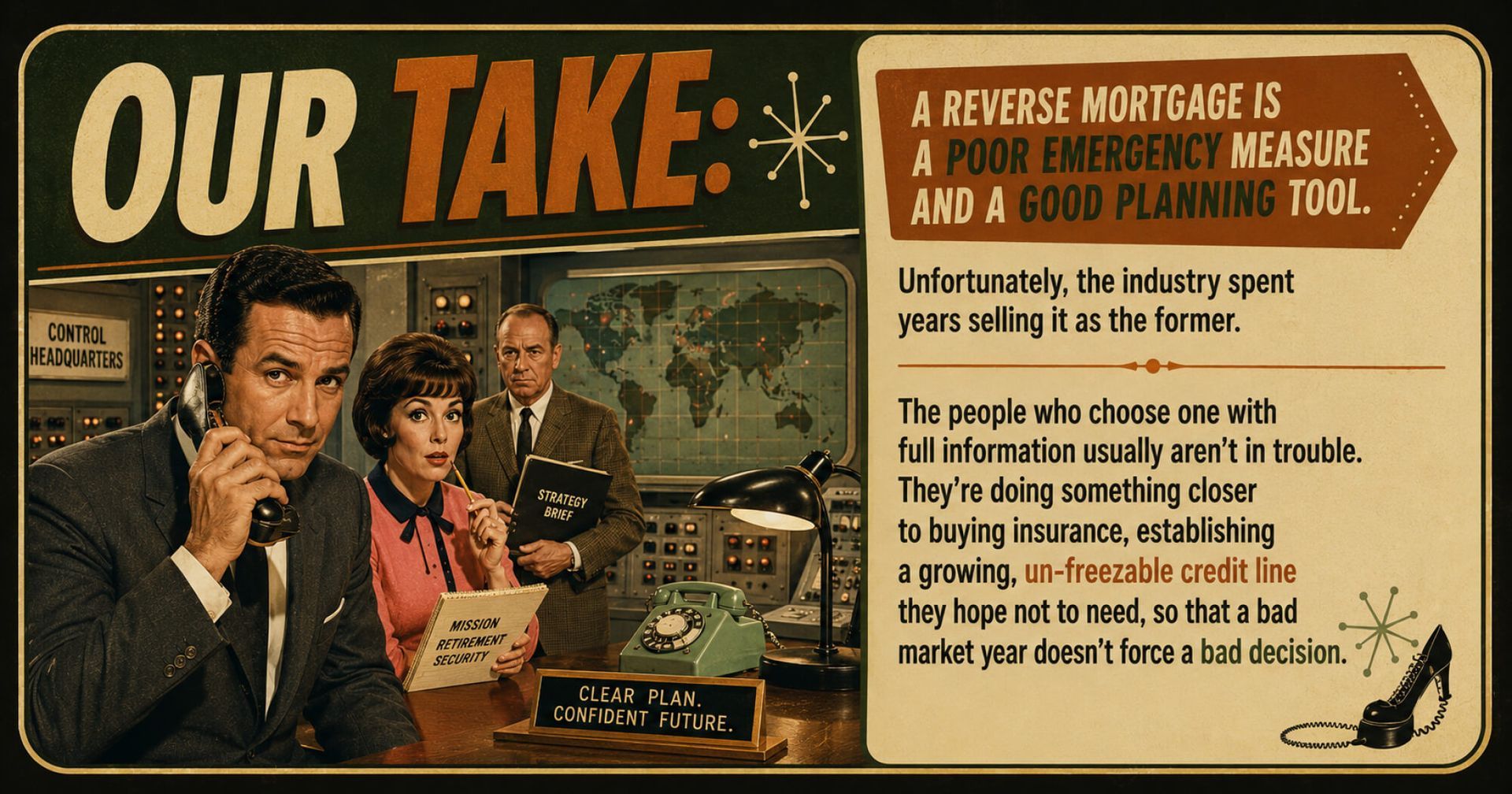
Green Monarch summarizes its position simply: a reverse mortgage can be a poor emergency measure and a useful planning tool when it is appropriate for the homeowner's circumstances. Its original article contrasts using a line strategically with treating it as a spending account or waiting until other assets have been exhausted.
This does not make a reverse mortgage right for everyone.
It does mean the question should not automatically be:
"Why would someone need a reverse mortgage?"
A better question may be:
"What role, if any, could home equity play in this person's retirement plan?"
What Should California Homeowners Consider First?
Before making a decision, California homeowners considering a reverse mortgage should understand both the potential strategy and the actual loan.
Research can demonstrate how a financial strategy performed under particular assumptions. It cannot determine whether the same strategy is appropriate for every homeowner.
Your home value, existing mortgage, age, retirement assets, cash-flow needs, future housing plans, costs, family considerations and financial goals can all affect the decision.
That is why being informed matters.
The goal is not simply to find a reverse mortgage lender near me or choose the first company offering access to home equity. It is to find someone willing to explain the loan, the costs, the potential advantages, the limitations and the alternatives so you can make an informed decision.
Green Monarch's Take on Reverse Mortgage Planning
For Green Monarch, reverse mortgage planning starts with determining whether the strategy actually fits the homeowner.
The company's original article makes an important distinction between using a reverse mortgage as an emergency measure and establishing one as part of a deliberate retirement strategy.
People choosing the latter are not necessarily running out of money.
They may be establishing a financial resource they hope they will not need to use, so that a difficult market year does not automatically force an unfavorable investment decision.
That is the larger point behind the research.
Smart retirement planning is not about using every financial tool available. It is about understanding which tools make sense, when they make sense, and when they do not.
If this type of strategy sounds relevant to your situation, continue doing your homework.
Green Monarch encourages homeowners to independently review the research, learn about the costs and limitations, and understand the complete picture before making a decision.
When you're ready to discuss whether a standby reverse mortgage strategy may fit your circumstances, call
Green Monarch at (800) 345-2041.